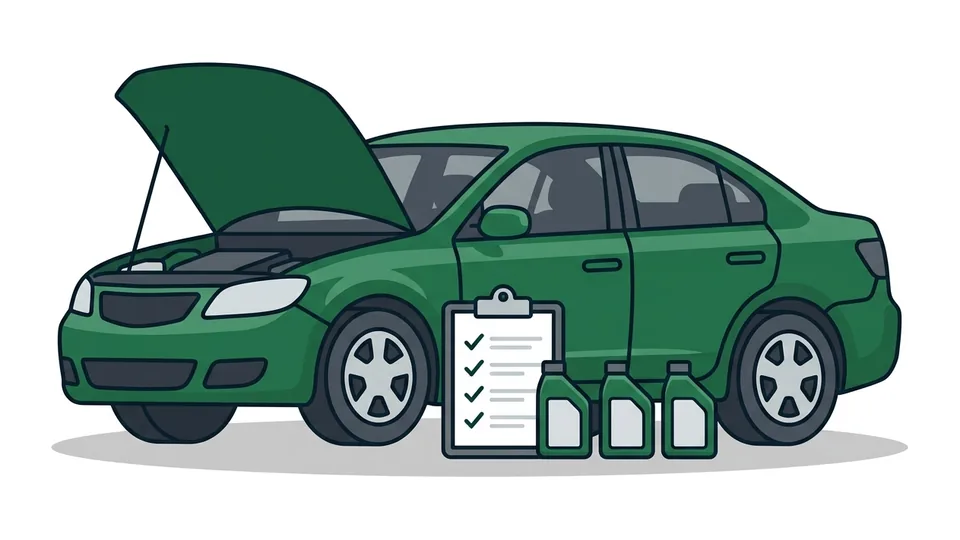
If you buy a used car with no dealer history, do this: treat time-based fluids as due (engine oil and filter, brake fluid, coolant), and inspect gearbox and differential oil and check the manual first before deciding. This is this site’s rule of thumb, not a carmaker rule. You cannot know when the previous owner last changed anything, and some fluids age with time even if the car is not driven.
1. The idea: when history is unknown
- Ask for the service book or dealer history first. Workshop receipts help too. If they show a date and mileage, count from the last service.
- No proof means count it as never changed, for fluids that are changed by time. Changing is cheaper than damage.
- ZF, an automatic-transmission maker, says in its data sheet that with hot or heavy use, or unknown past use of the vehicle, it can make sense to change gearbox oil at shorter intervals (ZF itself recommends about 150,000 km for its gearboxes).
- Take specs from your own manual, not from a similar-looking car. Per-model tables are at Fluids by car model.
2. Three Thai-manual examples
Intervals differ by model, so no single number fits every car. From the Thai-language manuals:
| Model | Engine oil | Gearbox oil | Brake fluid | Coolant |
|---|---|---|---|---|
| Yaris Ativ 1.2 (2023) | 0W-16, every 10,000 km or 12 months | CVT Fluid FE: inspect every 12 months, replace every 100,000 km | DOT 3, every 40,000 km or 24 months | First at 160,000 km, then every 80,000 km |
| Camry ACV40 (2006) | 5W-30 to 20W-50, every 10,000 km (severe use 5,000 km) | ATF WS: inspect at 40,000/80,000 km; severe use: replace every 80,000 km | DOT 3, at 40,000/80,000 km or 24 months | First at 160,000 km, then every 80,000 km |
| Hilux Revo 2.4 (2024) | By emission standard, every 10,000 km or 12 months | ATF WS: inspect every 40,000 km | DOT 3 or DOT 4, every 40,000 km or 24 months | First at 160,000 km, then every 80,000 km |
Brake fluid is 24 months in all three. For the Camry and Hilux automatics the normal schedule only says “inspect”, not “replace”, which is why you need to look at the real condition first.
3. The 7-item checklist
1) Engine oil + filter — change now
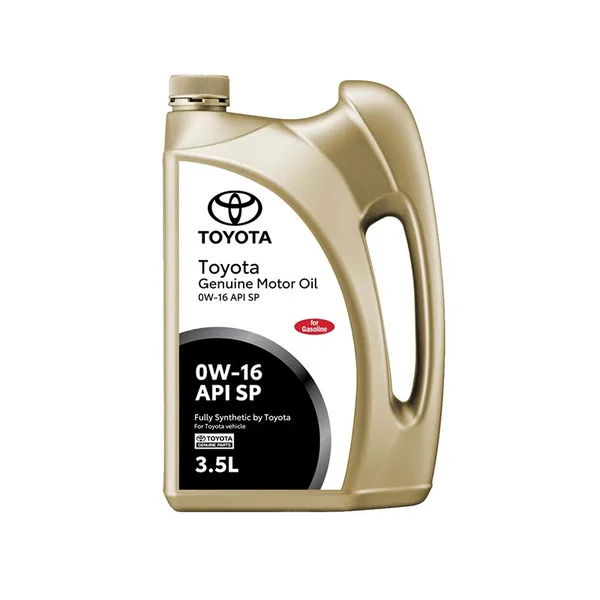
Do this first: it is the cheapest and most frequent. Use the grade and standard in your manual (the Thai Ativ manual gives 0W-16 as factory fill; on EURO V/VI diesels, never use oil outside the manual’s standard). Change the filter too. See Oil change interval.
2) Gearbox oil (automatic / CVT / manual) — inspect first
- Check colour and smell. A burnt smell or metal particles means stop and have the dealer inspect it, not just change the oil (per ZF’s procedure).
- For a high-mileage automatic that was never serviced, talk to a dealer first. New oil does not undo damage already done, and many gearboxes have no dipstick, so the level is set with a scan tool.
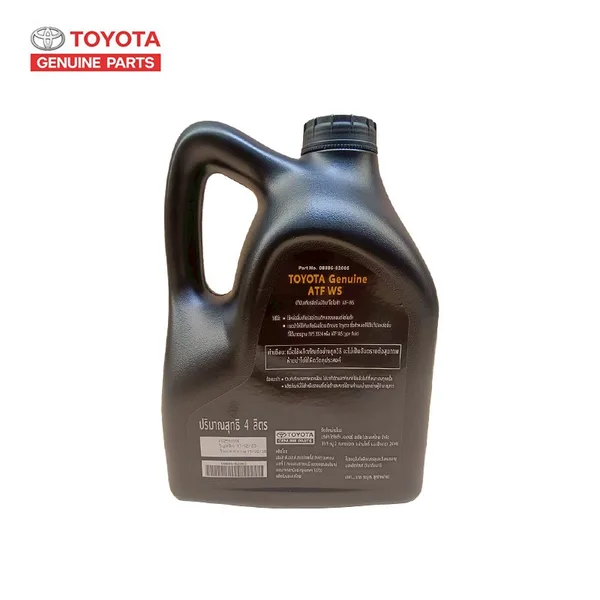
- Use only the fluid type in the manual. ATF and CVT fluid are not interchangeable. See ATF vs CVT fluid and ATF change interval.
- For shuddering, jerking or odd shifts, see Automatic transmission symptoms.
3) Brake fluid — change now (by time)
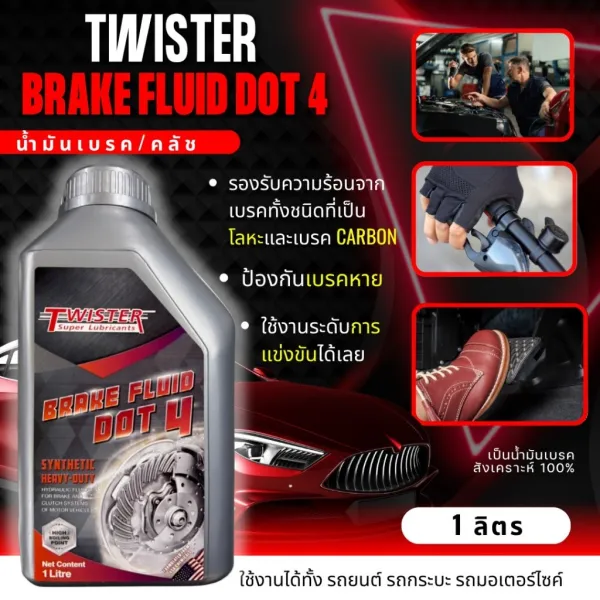
Glycol brake fluid absorbs moisture over time, and the Thai manuals above all say 24 months. If you do not know when it was changed, change it. Use the DOT on the manual or reservoir cap. See DOT 3, 4, 5.1. If the pedal feels soft or sinks, do not keep driving; get it checked right away. See Soft brake pedal.
4) Coolant — change now if history is unknown
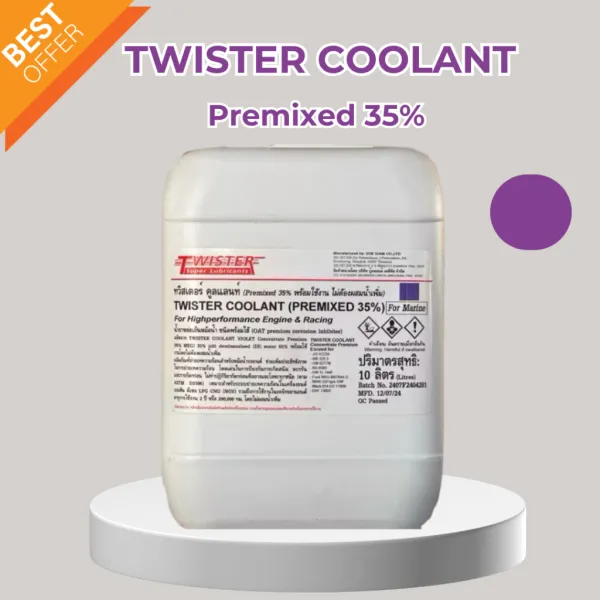
The three Toyota manuals say first change at 160,000 km, then every 80,000 km, and never plain water. If the car is past that and there is no record, treat it as due. Never mix different types. Toyota’s manuals call for Super Long Life Coolant or an ethylene-glycol coolant free of silicate, amine, nitrite and borate. To switch type, drain the old coolant fully first. Read Radiator coolant. Check only when the engine is cold.
5) Differential and transfer case (4WD pickups) — inspect first, change if no history
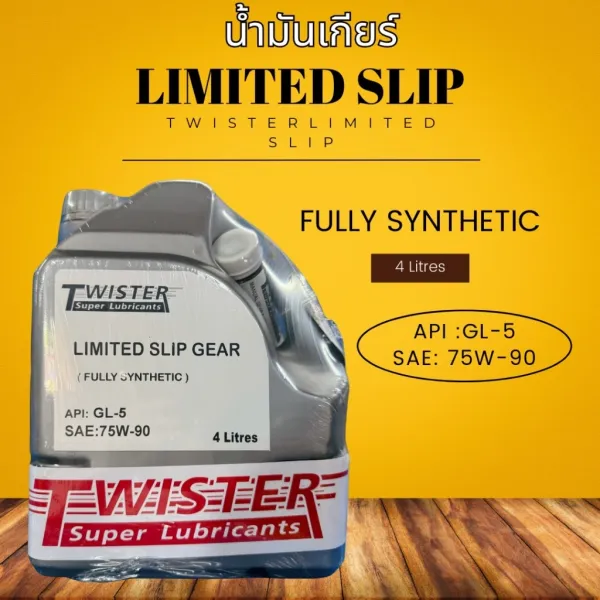
The Thai Hilux Revo manual says replace differential oil (GL-5 75W-85) at 40,000 and 80,000 km or 48 months, and inspect the transfer case and manual gearbox at 40,000 km or 48 months. If the car has an LSD or has been through floodwater, inspect the oil (milky means change immediately). See Manual gearbox and differential oil.
6) Power steering fluid — only if fitted
First see whether there is a reservoir. Many newer cars are electric and need no fluid. The Camry ACV40 and Hilux Revo manuals specify DEXRON II or III. Check level and colour; if dark or burnt-smelling, have a workshop change it. See Power steering fluid.
7) Clutch fluid — manual gearbox only
In many cars it is the same fluid as the brakes (the Hilux Revo manual says DOT 3 or DOT 4, inspect every 10,000 km or 6 months). When you change brake fluid, ask whether the clutch is done at the same time.
4. Reading condition from colour and smell
Colour gives only a rough hint, not a diagnosis.
- Drips under the car: compare colours in Fluid leak colours.
- Milky engine oil may mean water or coolant is mixed in. Do not keep running it; have a mechanic check. See Milky engine oil.
- Diesel oil that turns black fast is often normal for diesels. See Diesel oil turns black.
- A burnt smell in gearbox oil: have the dealer inspect before changing.
5. Is an engine flush needed?
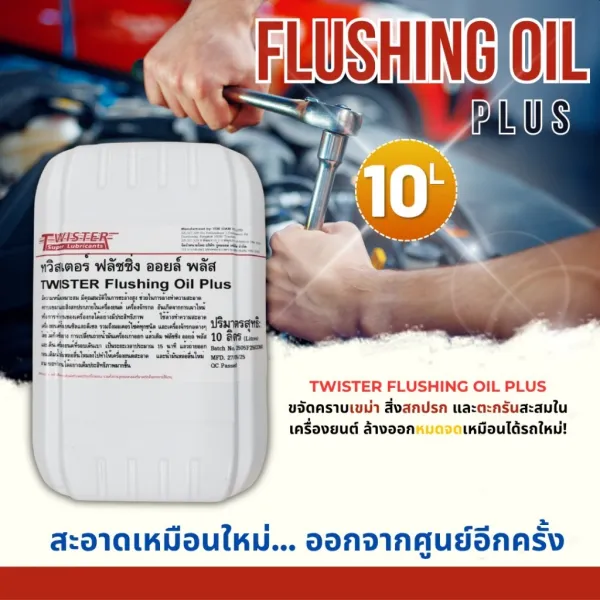
It does not need to be done on every car. We found no carmaker source saying a flush is required before an oil change, and the Thai manuals we checked have no such step. On a used car, do a normal oil and filter change first. If you choose to use flushing oil, follow the label only (it is for flushing, never for driving) and change the filter at the same time. If you suspect an engine problem, have a mechanic inspect it rather than hoping a flush fixes it. See Are additives worth it?.
6. Suggested order
- Get the service book or receipts, and open your model’s table at /en/cars/.
- Check level and condition of every visible fluid; look for leaks.
- Change engine oil + filter and brake fluid.
- Change coolant if there is no record.
- Inspect differential/transfer case if it is a pickup.
- High-mileage automatic: talk to a dealer before doing anything.
7. Summary table
| Fluid | Can you check it yourself? | Change now or inspect first | Read more |
|---|---|---|---|
| Engine oil + filter | Yes (dipstick) | Change now | Interval |
| Gearbox oil (auto/CVT/manual) | Hard (many have no dipstick) | Inspect first; high-mileage auto: ask a dealer | ATF |
| Brake fluid | Level yes, age no | Change now | DOT |
| Coolant | Level, engine cold | Change now if no history | Coolant |
| Differential / transfer case | Needs a lift | Inspect first | Gear oil |
| Power steering fluid | Yes (if reservoir) | Inspect first | Power steering |
| Clutch fluid | Level yes | Do with brakes | DOT |
Quick summary
- No history → ask for the service book first; if none, count time-based fluids as never changed.
- Change now: engine oil + filter, brake fluid, coolant (never mix types).
- Inspect first: high-mileage automatic — ask a dealer; differential and transfer case — check condition.
- Specs come from your manual, not another car. See the tables at /en/cars/.
- Engine flush is not needed on every car.
- Soft brakes, milky oil, burnt smell in gearbox oil → stop and have a mechanic check.
Browse products in Gearbox, brake and coolant fluids.