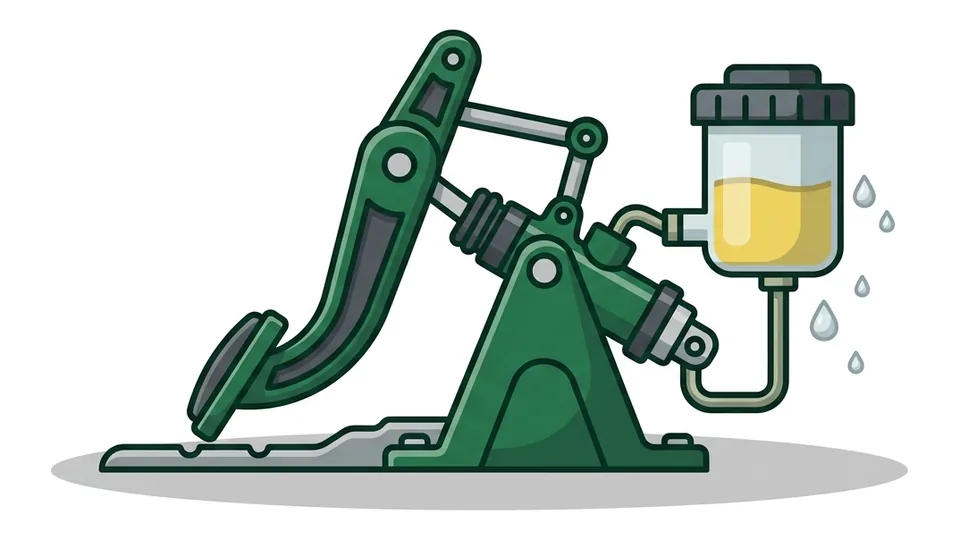
If the brake pedal goes lower than before or sinks slowly while you hold it, treat it as a brake-system problem and have a mechanic check it before you keep driving. If the red brake warning light is on or the pedal goes to the floor, stop in a safe place immediately. This guide separates the symptoms, lists possible causes and what you can check yourself. Diagnosis and repair are the mechanic’s job.
1. Symptoms to notice
- The pedal goes lower than before, or feels spongy
- You need to pump the pedal before the brakes bite
- The pedal slowly sinks while held down
- The fluid level in the reservoir drops
- The brake warning light comes on
- Brakes fade after a long downhill or repeated hard braking
These symptoms do not tell you the cause, but every one is a safety matter. Do not wait.
2. Possible causes
| Possible cause | What it may look like | Who checks |
|---|---|---|
| Brake fluid has absorbed moisture, lowering its boiling point | Pedal sinks after sustained hard braking, e.g. a long descent | Mechanic (fluid change, bleeding) |
| Air or vapour in the system | Spongy or low pedal | Mechanic (bleeding, find the source) |
| Brake fluid leak | Level drops fast, wet marks, warning light | Mechanic, must find the leak |
| Level falls because brake pads wear | Slow drop over mileage | You can check; have pads inspected |
| Master cylinder or another component fault | Cannot be told apart by feel | Mechanic only |
This table lists what a workshop looks at. It does not say which one your car has: the same symptom has several causes.
Wet brake fluid
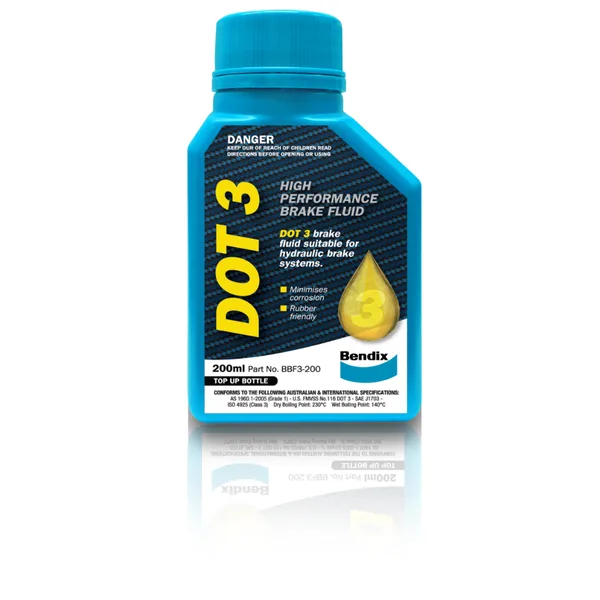
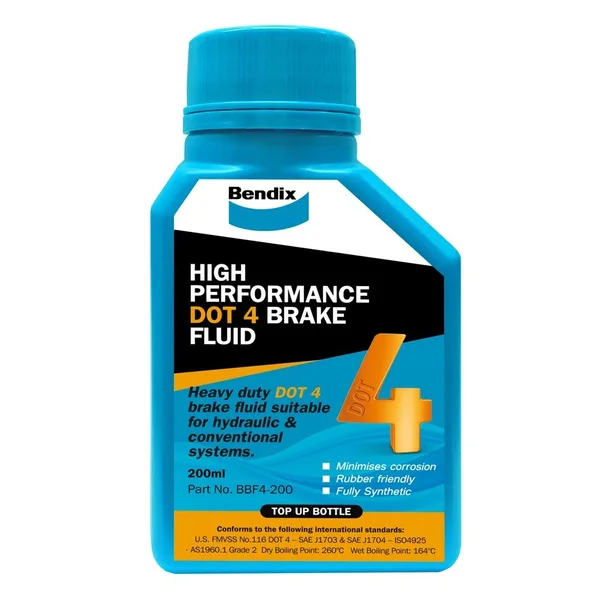
Glycol fluids (DOT 3 / 4 / 5.1) absorb moisture from the air. Castrol says moisture lowers the boiling point, and that boiling fluid becomes compressible and stops responding to pedal pressure. The Thai Toyota Yaris Ativ manual (p. 408) also warns that excess moisture reduces braking performance.
FMVSS 116 sets minimum boiling points. The gap between fresh and moist fluid is large.
| Standard | Minimum dry boiling point | Minimum wet boiling point |
|---|---|---|
| DOT 3 | 205°C | 140°C |
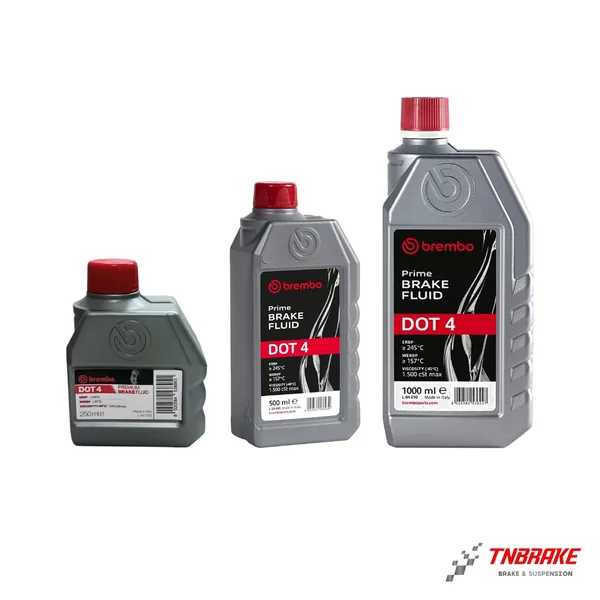
| DOT 4 | 230°C | 155°C |
| DOT 5 (silicone) | 260°C | 180°C |
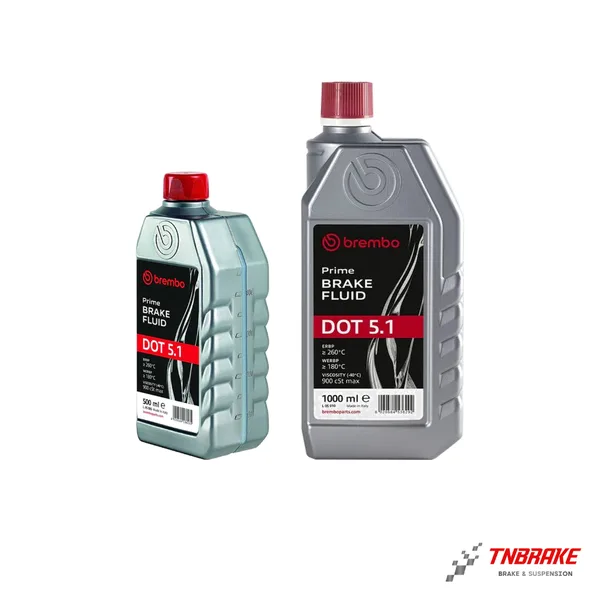
The full table including DOT 5.1, and how to choose, is in DOT 3, 4, 5.1 brake fluid compared, so it is not repeated here. The point: aged fluid drifts toward the much lower “wet” figure and boils more easily under hard braking.
Level dropping in the reservoir
Toyota manuals (Hilux Revo 2024, Yaris Ativ 2023) say the level falls slightly as pads wear, but having to top up often may indicate a serious problem. The Isuzu D-Max 2024 manual says the brake warning light comes on when the level drops, whether from pad wear or a leak.
A rough way to tell: note the level. A slow drop over mileage may be pad wear. A fast drop or wet marks means have the mechanic look for a leak. For colours and locations of drips, see Fluid drips under the car.
3. What you can check yourself
- Park on level ground, engine off, and check the level sits between MIN and MAX (Toyota Yaris Ativ manual, p. 407).
- Look around the reservoir and under the car for wet marks. Lay cardboard underneath.
- Note when it happens: always, only under hard braking, or only when hot.
- Do not top up and keep driving to see if it disappears. If it needs topping up, the cause must be found.
Leave bleeding, removing the master cylinder or replacing lines to a workshop with the right tools.
4. When not to drive
Stop in a safe place and call a mechanic or tow truck if any of these applies:
- The red brake warning light is on (or a warning chime sounds)
- The pedal goes to the floor or has no resistance
- The brake and ABS lights are on together
- Obvious brake fluid leak, or the level is well below MIN
From the Thai manuals:
| Car | What the manual says | Page |
|---|---|---|
| Toyota Hilux Revo 2024 | Red brake light (low brake fluid or brake fault): stop immediately in a safe place and contact the dealer; driving on may be dangerous | 590 |
| Toyota Yaris Ativ 2023 | Red brake light: stop in a safe place immediately and contact the dealer; driving on is dangerous | 455, 460 |
| Isuzu D-Max 2024 | If the brake light comes on with the engine running, park safely and contact an Isuzu service centre immediately; if the ABS light is on too, stop at once | 4-70 |
| Honda City 2026 | Red hand-brake/brake light = low fluid or brake fault: stop in a safe place immediately; the pedal will feel heavier | 96, 437 |
The Honda City manual (p. 437) also says to shift down to slow the car if necessary, and to stop at once in a safe place if there is no resistance from the pedal. This is the manual’s advice, not this site’s conclusion.
For yellow warning lights, the Toyota Yaris Ativ manual says have the car inspected promptly; the Honda City manual says avoid high speed and sudden braking and go to the dealer immediately. If you are unsure which light means what, open your own manual.
Toyota manuals also explain that the brake system has two hydraulic circuits: if one fails the other keeps working, but you must press harder and stopping distance increases, and the manual says to repair it promptly (Hilux p. 199, Ativ p. 190). Do not read that as “it still brakes, keep going.”
5. Change intervals in Thai manuals
Intervals differ by model; use your own car’s. Full per-model tables are in fluid tables by model.
| Model | Type | Interval | Manual pages |
|---|---|---|---|
| Toyota Hilux Revo 2024 | DOT 3 or DOT 4 | 40,000 km or 24 months | 476, 682–683 |
| Toyota Yaris Ativ 2023 | DOT 3 | 40,000 km or 24 months | 388, 513 |
| Toyota Camry ACV40 2006 | DOT 3 | 40,000 and 80,000 km or 24 months | 323, 365 |
| Isuzu D-Max 1.9 2024 | DOT 3 | 40,000 and 80,000 km (24/48 months) | 6-132, 6-140 |
| Honda City turbo 2026 | DOT 3 or DOT 4 | 60,000 km or 36 months | maintenance booklet 15 · 362, 455 |
The Honda City manual says never use DOT 5. The article brake fluid DOT explains that DOT 5 is silicone, must not be mixed with DOT 3/4/5.1, and is not the same as DOT 5.1.
Castrol says most manufacturers recommend changing at least every two years, in line with the Toyota figures above. There is no measured source for how much faster Thailand’s humid air degrades fluid, so this guide gives no “change X months earlier” figure. If you do a lot of hard downhill driving or suspect the fluid is old, ask the dealer.
6. Do’s and don’ts when topping up or changing
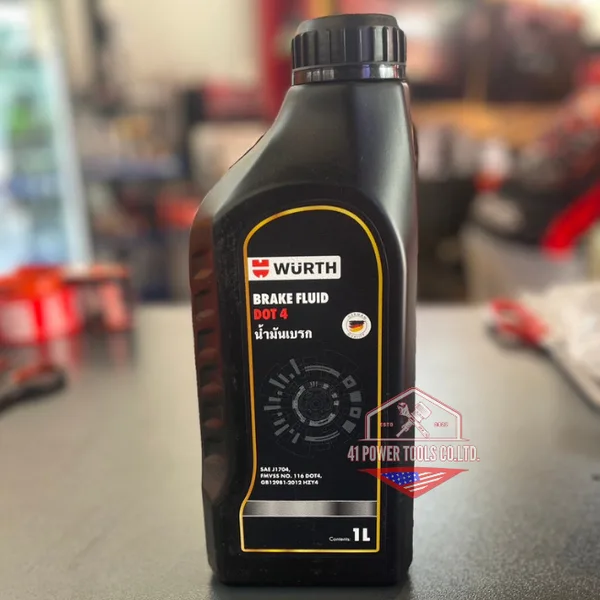
- Use the type in the manual or on the cap (e.g. Toyota Ativ: DOT 3), from a freshly opened bottle. Toyota’s manual says to use only newly opened fluid.
- Never add DOT 5 silicone to a glycol system.
- Never put other fluids (such as mineral oil) into the brake system. Some brake-fluid labels warn about this.
- Brake fluid damages paint. Rinse with water at once; if it gets in the eyes, rinse with clean water and see a doctor (per the Toyota manual).
- If you have to top up often, do not assume that fixes it. Look for a leak.
7. If the car was just flooded
A car that stood in water should have all fluids checked. See Checking fluids after a flood.
Quick summary
- Pedal low, spongy, needing pumping, or sinking slowly = have a mechanic check before driving on
- Red brake warning light or pedal to the floor = stop immediately in a safe place (Toyota, Isuzu and Honda manuals)
- A slow level drop may be pad wear; a fast drop or topping up often points to a leak
- Brake fluid absorbs moisture; change it on the manual’s schedule (e.g. Toyota 24 months, Honda City 36 months)
- Use the type in the manual; never mix DOT 5 silicone with glycol fluids
See products in gear oil · brake · coolant.