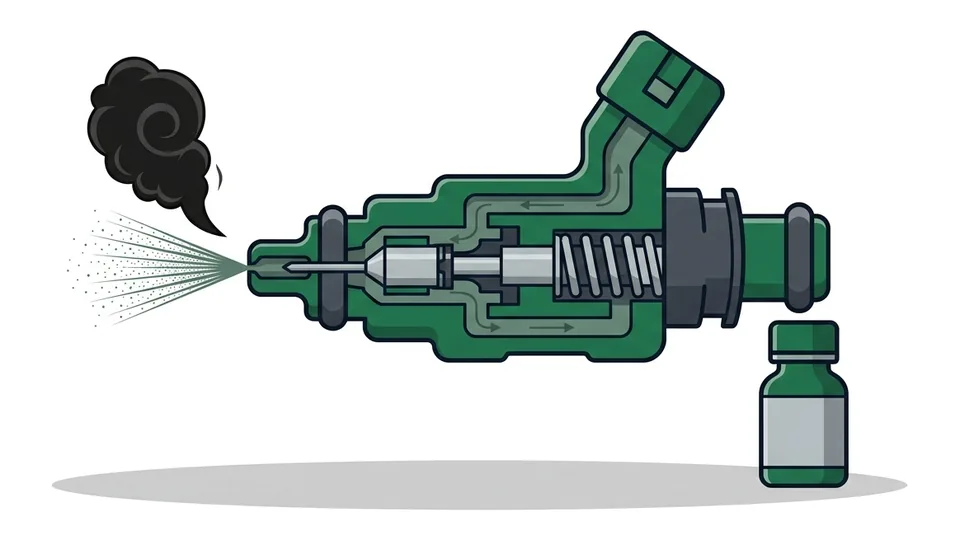
Diesel fuel additives mainly help in one case: deposits on the injectors (plus fuel conditioning such as cetane or lubricity). They cannot repair worn injectors, a failed pump, a turbo or an EGR fault, and Thai owner’s manuals do not all say the same thing — some warn against them. If the truck is sluggish or smokes black, check the air filter, the fuel filter water trap and the service schedule before buying anything. For smoke colours, see White, black and blue exhaust smoke.
This guide does not diagnose your vehicle. Page numbers are the printed page numbers in each manual.
1. What diesel additives do, according to standards bodies
The Worldwide Fuel Charter (6th edition, 2019, issued jointly by ACEA, Alliance, EMA and JAMA) describes the job of diesel additives:
| Function | What the source says |
|---|---|
| Prevent/clean injector deposits | Deposit-control additives at high doses can partly clean an already heavily coked injector; lower doses keep injectors clean. Many commercial diesels already contain them (p. 85) |
| Raise cetane | Cetane improvers raise the number, but the effect on the vehicle is not always the same as natural cetane, and raising it by more than 10 over the natural level is not recommended (p. 64) |
| Improve lubricity | Removing sulphur in refining reduces natural lubricity, so additives are used to restore it. Pumps without separate lubrication rely on the fuel itself (p. 86) |
Note that all of this is about dirt that has stuck or fuel properties. None of it replaces worn metal.
Diesel sold in Thailand already has to meet minimum cetane and lubricity limits (see section 4), so ordinary pump diesel is not automatically lacking either.
2. What additives cannot do
- Worn or damaged injectors. Additives dissolve deposits; they do not restore worn nozzle holes or surfaces. The diesel cleaner listed on this site says itself that it will not fix faults caused by damaged injectors or pumps.
- Fuel pump, turbo, EGR. None of the sources we read says an additive repairs these. If the symptom comes from them, a technician needs to test it.
- A clogged air filter or water in the tank. Fix the cause. See section 5.
- Internal diesel injector deposits (IDID). The Worldwide Fuel Charter says engineering cannot yet fully protect against them; some deposit-control additives “may” reduce the effects, and additive makers should field-test that their products do not add to internal deposits (p. 85).
3. What Thai owner’s manuals say about fuel additives
| Brand | What the manual says |
|---|---|
| Isuzu D-Max (Thai manual, 2024) | Warns that mixing additives such as water absorbers into the fuel tank harms the fuel filter, causes lubrication problems in the injectors, and may affect the engine and exhaust cleaning system (p. 6-141). Do not use starting aids such as ether in the intake (p. 4-2). The warranty excludes damage from fuel, lubricants or chemicals not specified in the manual (warranty terms, exclusion 5). |
| Mitsubishi Triton (English manual published by Mitsubishi Thailand, 2024) | Poor-quality diesel can cause injector deposits, black smoke and rough idle; it advises adding a genuine Mitsubishi diesel system cleaner and warns that an unsuitable additive could make the engine malfunction (p. 2-2). On DPF vehicles, do not use moisture-removing agents or any other fuel additive, as they can harm the DPF (p. 6-22). |
| Toyota Hilux Revo / Fortuner (Thai manuals, 2024) | We found no diesel-specific additive text. The only caution is in the gasoline section: do not add metal-containing fuel additives (Revo p. 693). The manual tells you to use the specified fuel from stations that guarantee quality (Revo p. 694). Ask the service centre if unsure. |
| Ford Ranger | We could not open the Thai manual, so we draw no conclusion. Check your own manual or ask the dealer. |
Takeaway: manuals do not give a general green light to third-party additives. One brand warns clearly; another recommends only its own genuine product. If the vehicle is under warranty, ask the dealer before adding anything, because Isuzu’s exclusion ties to “chemicals not specified in the manual”.
4. Thai diesel standards (B7/B10/B20) and newer vehicles
The Department of Energy Business announcement on diesel characteristics and quality, B.E. 2563 (Royal Gazette, 9 June 2020), says:
- B7 can be used in diesel vehicles generally; “regular” high-speed diesel (10% biodiesel) and B20 are only for vehicles the manufacturer approves (clause 6).
- B7 must have cetane of at least 50, sulphur of no more than 10 mg/kg from 1 January 2024, and lubricity (HFRR) no worse than 460 micrometres.
- A fuel seller must get approval from the Director-General before adding additives to diesel.
The announcement may have been amended; check the latest version with the Department before quoting numbers.
From the manuals:
- Toyota Revo/Fortuner non-DPF models need cetane 48 or higher. DPF models need sulphur of 10 ppm or less and cetane 48 or higher, and must not use diesel above 10 ppm sulphur (Revo pp. 692, 694; Fortuner pp. 698, 700). Fuel with more than 5% FAME shortens the fuel filter replacement interval (Revo p. 694).
- Isuzu says to use fuel meeting the Department’s announcement from approved stations and not to use high-sulphur diesel, which can damage the engine, emission control or EGR (p. 6-141). With B20 the fuel filter light may come on sooner, and B20 must not be left in the tank for long (p. 6-143).
Newer DPF vehicles are more sensitive to sulphur and additives than older ones. See Revo/Fortuner DPF warning light.
5. Check in this order before buying an additive
If the vehicle feels sluggish or smokes black, work down this list:
- Air filter. Isuzu says a clogged air filter reduces power and raises fuel use (p. 6-47). Inspect or replace it per the schedule. The Revo manual shows how to take the element out (p. 511). Do not drive without the filter.
- Fuel filter water trap. If the water warning appears, drain per the manual (Revo p. 513, Isuzu p. 6-49, Triton p. 8-7). Toyota recommends the service centre do it because the procedure is difficult.
- Both Revo and Isuzu warn not to keep driving. The Revo manual says do not drive on, as the fuel pump can be damaged (pp. 607–608). Isuzu says drain immediately; driving on can damage the injection system (p. 4-81).
- Bosch notes that water in diesel causes corrosion, rust particles cause abrasive wear, and water does not lubricate like fuel. An additive does not replace draining.
- Service schedule. Check the table in the manual (Revo p. 475 lists the diesel water-trap check; Isuzu p. 6-129) for fuel filter, air filter and engine oil. Heavy use or frequent traffic may call for the severe-service schedule.
- The fuel itself. Fill at stations that meet the standard, and do not leave fuel sitting in the tank, as Isuzu warns.
- Go straight to a technician if the engine or DPF warning light is on, power is clearly down, black smoke is thick and constant, or the water warning appears. Do not try an additive first.
6. If you do use one
- Read the manual first. If it forbids additives or the vehicle has a DPF as in the Triton manual, do not add it.
- Under warranty, ask the dealer first.
- Follow the dosage on the actual package. Do not exceed it or mix several products.
- Match the product to the vehicle: diesel additives for diesel, never into engine oil.
- Do not expect an instant change. If the symptom stays, go back to section 5.
For engine oil additives see Engine oil additives — worth it?. For oil that matches the manual see Choosing diesel pickup engine oil.
7. Products on this site — only what the listing states
| Product | What the product data says |
|---|---|
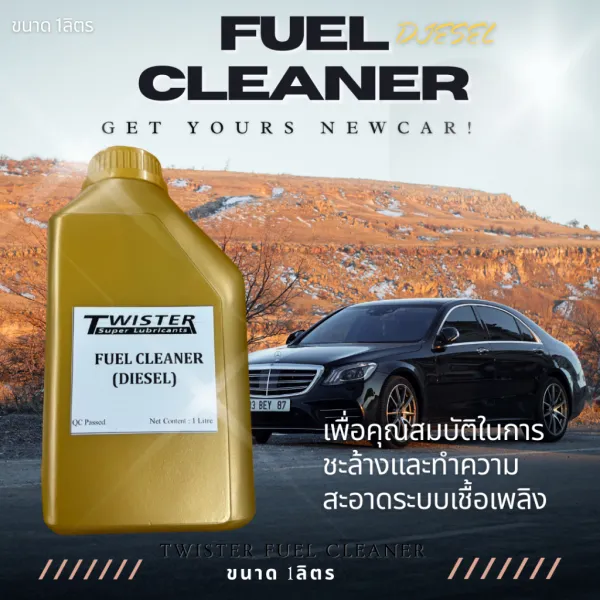
| Fuel Cleaner (Diesel) 1 L | Cleans diesel fuel systems; suited where the system may be dirty, for example after long storage; will not fix faults from damaged injectors or pumps. The label images show no dosage. |
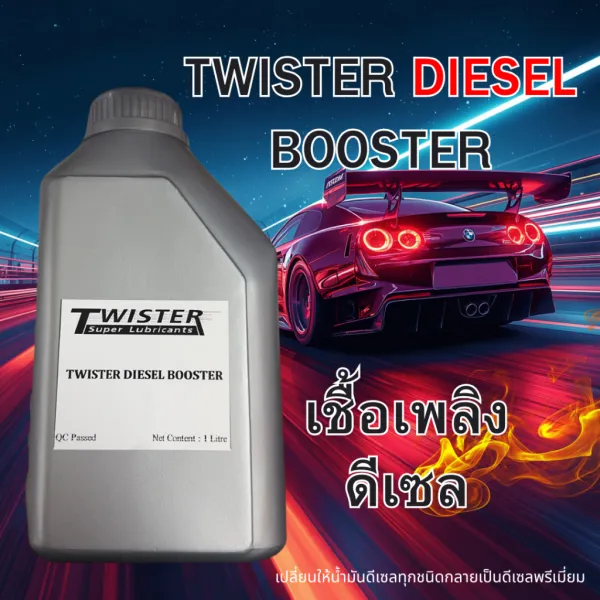
| Diesel Booster 1 / 10 L | Diesel fuel additive for the tank. The label in the photo shows only the name and volume, no dosage. |
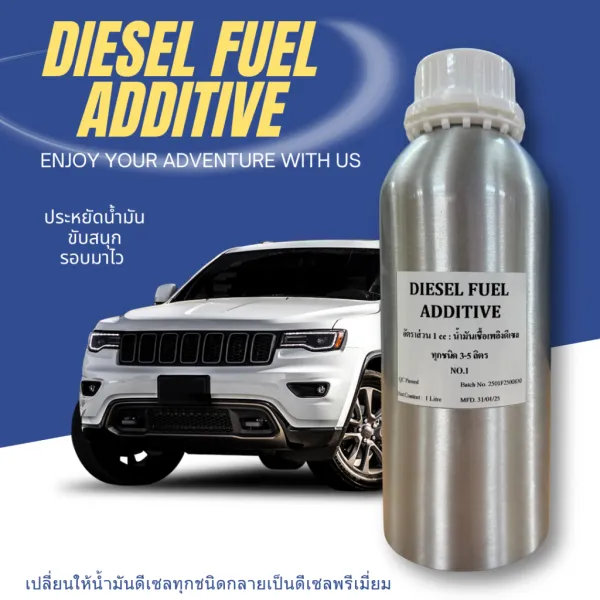
| Diesel Fuel Additive 1 L | Label dosage is 1 cc per 3–5 L of diesel (about 10–17 cc for a 50 L fill). Goes in the fuel tank only. |
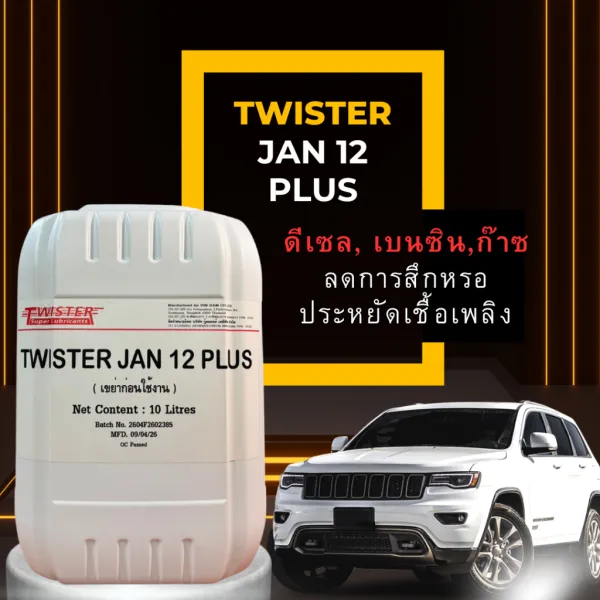
| JAN12 PLUS 10 L | Fuel conditioner; the seller says it suits diesel and gasoline. The label says shake before use; no dosage in the images. |
We do not claim these products cure sluggishness or black smoke or save fuel, because the labels do not say so, and we do not claim they meet any vehicle maker’s conditions.
Quick summary
- Diesel additives help with injector deposits and fuel properties. They do not repair worn parts, pumps, turbos or EGR.
- Isuzu warns about additives in the tank; Mitsubishi recommends only its genuine product and forbids additives on DPF models; Toyota has no diesel-specific text — ask the dealer if under warranty.
- Thai diesel already has to meet cetane, sulphur and lubricity limits set by the Department of Energy Business; DPF vehicles need 10 ppm sulphur or less.
- Check the air filter, fuel filter water trap and service schedule first.
- Water warning, DPF light or clear power loss means the service centre, not an additive.
- Do not claim more than the label says; read the dosage on the actual package.
See products in Additives · Diesel engine oil