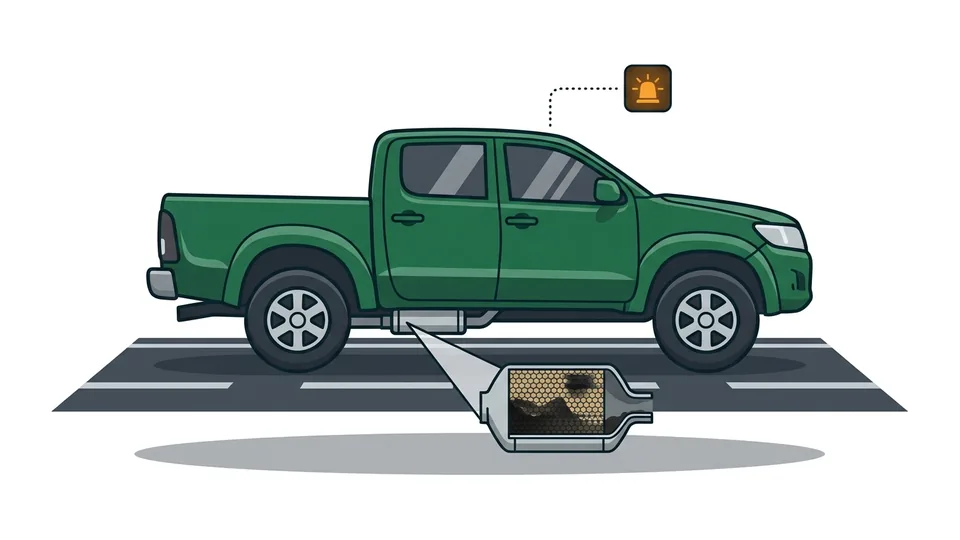
If the message “DPF full, please clean by following the manual” appears (on Revo models without the multi-information display, the DPF light flashes), first drive steadily at about 60 km/h for roughly 20–30 minutes. If it does not clear, stop and press the DPF switch as the manual describes. But if the message changes to “please contact a service centre” with a warning buzzer and the engine-control warning light on, take the truck to a Toyota service centre straight away. Do not keep trying to burn it off yourself.
This article is based on the Thai Toyota owner’s manuals for the Hilux Revo (OM0K497T) and Fortuner (OM0K539T), 2024. Page numbers are the printed numbers in the books. It is not advice for your specific vehicle; if your manual differs, follow your manual.
1. Does your vehicle have a DPF?
A DPF is the soot filter in a diesel exhaust. The manuals say that when soot builds up to a set level, the filter cleans itself automatically (Revo p. 350, Fortuner p. 377). In normal driving this happens roughly every 200–300 km, depending on weather and driving conditions.
Both manuals cover several countries and engines, and the DPF section is marked “only on vehicles so equipped”. So we cannot say which Thai variants or model years have a DPF. The reliable way is to ask a Toyota service centre, or to check whether your vehicle has a DPF warning light in the instrument cluster and a DPF switch. Fluid tables per model are at Hilux Revo 2.4 and Fortuner 2.4/2.8.
2. What you may see during a normal burn-off
The manuals say these can occur while the filter is cleaning itself.
- Idle speed rises
- The exhaust smells different from an ordinary diesel
- Some white smoke from the tailpipe; the manual says this is not a fault
During this time the DPF light comes on (models without the multi-information display) or the message “DPF cleaning in progress” appears (models with the display). The manuals warn: do not stop near flammable material such as dry grass, keep people away from the tailpipe, do not do it in an enclosed space such as a garage, and do not touch the exhaust. It is very hot and can cause burns or a fire.
3. Why short city trips trigger warnings more often
A burn-off needs the exhaust to get hot enough. The manuals say the DPF warning may appear sooner than usual in two cases (Revo p. 355, Fortuner p. 382).
- Driving only at low speed, such as 20 km/h or less
- Frequent engine start/stop, where the engine runs for less than 10 minutes each time
They also advise avoiding short trips and long idling while waiting for a burn-off. If the engine is cold or the exhaust temperature is low, the burn-off can take longer or fail.
4. The manual’s steps
| Situation | What to do (Revo pp. 352–355, Fortuner pp. 380–382) |
|---|---|
| “DPF full, please check manual” or “…clean by following the manual” (Revo without display: DPF light flashing) | Drive steadily at about 60 km/h for 20–30 minutes, with the engine warmed up first |
| Message still showing after driving (for example in heavy traffic) | Stop and press the DPF switch to burn off manually |
| DPF light flashes again after you start driving (Revo without display) | Press the DPF switch |
| “DPF full, please contact a service centre” (Revo without display: DPF light flashing) with a buzzer and the engine-control warning light on | Take it to a Toyota service centre immediately |
If you must press the DPF switch, the manual gives this order.
- Stop in a safe place, with nothing flammable near the tailpipe and not in an enclosed space.
- Shift to P (automatic) or N (manual) and apply the parking brake. Do not switch the engine off.
- If the engine is cold, warm it up first.
- Press the DPF switch. Idle speed rises. The burn-off takes about 15–40 minutes.
- When the light or message goes out and idle returns to normal, rev the engine a few times to clear the exhaust.
Points from the manual
- Pressing the accelerator or the clutch (manual gearbox) during the burn-off stops it. Restart as soon as you can.
- If the engine stays at about 2,000 rpm for 10 minutes with no progress, the exhaust may not be hot enough. Press the accelerator to about 3,000 rpm for a while, then start again.
- Above 4,000 m altitude the system may not work.
- You can view the soot level on some versions. Revo models without the display show it on the odometer/trip meter in 11 levels; models with the display show low to full when you press the DPF switch or a warning appears (Revo p. 352, Fortuner p. 379). The manual says to use it for reference only.
5. When to stop driving and see a dealer
The manuals say clearly not to keep driving for long while the message “DPF full, please contact a service centre” is showing (Revo without display: DPF light flashing) and the buzzer sounds. If you keep driving, the engine-control warning light comes on, and the manual warns the vehicle may be damaged or an accident may occur. Take it to a Toyota service centre immediately.
Go straight to the dealer when
- The “contact a service centre” message appears, or the DPF light flashes (Revo without display) with a buzzer
- The engine-control warning light is on
- The warning comes back quickly after repeated burn-offs by the manual
- You are not sure whether your vehicle has a DPF or what to do
We do not diagnose for a mechanic. Cleaning, removing or replacing a DPF is a job for the service centre.
6. Engine oil and the DPF
The DPF section of the manuals has two prohibitions: do not use any fuel other than the one specified, and do not use any engine oil other than the one recommended (Revo p. 351, Fortuner p. 378). The specification tables are split into two groups.
| Group | Oil specified by the manual | Page |
|---|---|---|
| Not EURO V/VI | SAE 5W-30 (10W-30 allowed in mild climates) · API CF-4, CF or ACEA B3/B4/B5 or JASO DL-0 | Revo 668–669, Fortuner 681 |
| EURO V/VI | 0W-20 = ACEA C5 · 0W-30 and 5W-30 = ACEA C2 or JASO DL-1 · factory fill 0W-20 | Revo 670, Fortuner 683 |
For the EURO V/VI group, the manual says using oil outside ACEA C5, C2 or JASO DL-1 may damage the exhaust after-treatment (catalytic converter) device. If you are unsure which group your vehicle is in, the manual says to contact a Toyota service centre.
Why high-ash oil does not suit DPF vehicles. ACEA groups A/B as high-SAPS (high ash) oils, and class C as oils compatible with after-treatment systems (DPF, GPF), which ACEA says increase DPF life. JASO defines DL-1 for engines with a DPF or catalyst and limits ash, phosphorus and sulphur. More in What ACEA means.
Worth knowing
- In both Thai manuals’ lists there is no ACEA C3, API CK-4 or CI-4. So do not choose oil from the word “DPF” on the label alone; compare with the grades in the table. The articles Choosing diesel pickup oil and API CK-4 vs FA-4 are general information and do not replace your manual.
- The manuals do not discuss the effect of DPF burn-offs on oil level. They only say the level must be between the low and max marks on the dipstick (Revo p. 670 refers to p. 498, Fortuner to p. 541). If the level is above max, ask the service centre. How to check: Checking oil level.
- Check the change interval in your manual. The Thai row for diesel engine oil says every 10,000 km or 12 months; for severe use, compare the table for your vehicle. See Oil change interval.
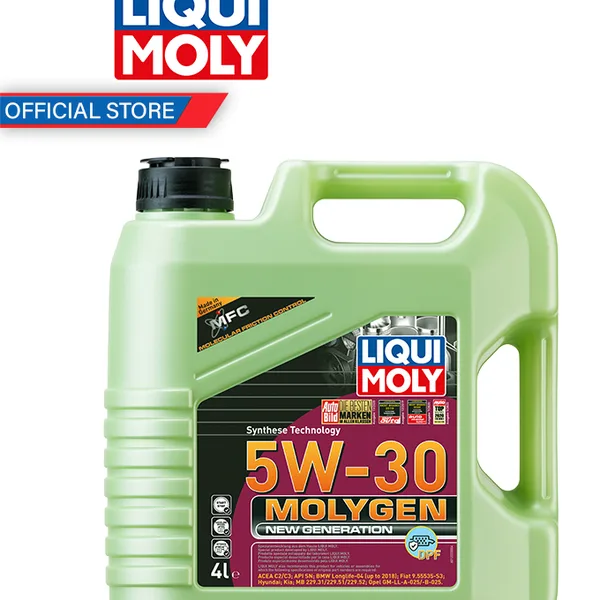
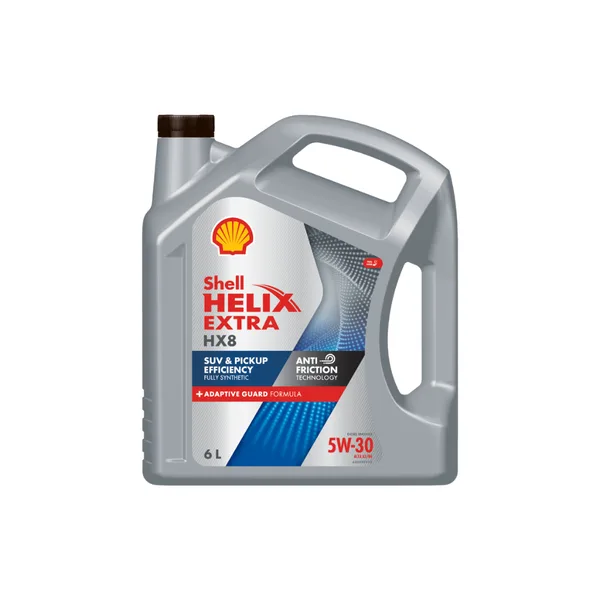
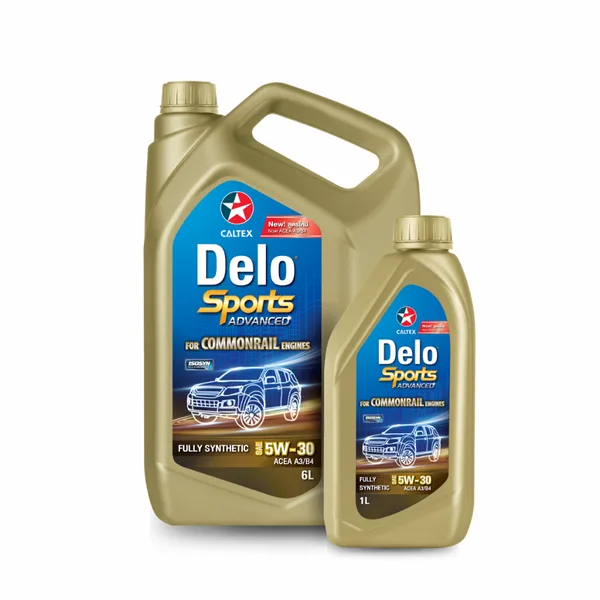
- Of the products linked below, the Liqui Moly label shows ACEA C2 in 5W-30, which fits the EURO V/VI group. The Shell and Caltex labels show ACEA A3/B4 in 5W-30, which fits only the non-EURO V/VI group (B4). So know your vehicle’s group before choosing.
7. DPF problems in Australia (not the Thai market)
This concerns vehicles sold in Australia. We found no Thai source confirming that Thai-market vehicles are affected, and we are not saying they are.
- On 7 April 2022 the Federal Court of Australia (Williams v Toyota Motor Corporation Australia) found that 264,170 Hilux, Fortuner and Prado vehicles with 1GD-FTV/2GD-FTV engines, sold between 1 October 2015 and 23 April 2020, had a defective DPF system and were not of acceptable quality.
- The defect the court accepted, from the referee’s report, was deposits on the DOC (the oxidation catalyst in front of the DPF) that kept the DPF from regenerating well. It caused white smoke, a foul smell and excessive warnings. The court listed blockage of the fifth fuel injector by carbon deposits among the consequences.
- The key trigger the court accepted was regular continuous driving at about 100 km/h, not short city trips. That is different from the reason the Thai manual gives in section 3.
- If warnings were ignored, the vehicle went into limp mode, with no fifth gear and limited acceleration.
- Toyota Australia changed production from 1 June 2018 and issued a field fix from May 2020. The court accepted the 2020 fix works. CarExpert reported that in 2018 Toyota added a DPF burn-off button to the 2.8, which the court found less effective.
- On appeal (27 March 2023) the Full Court upheld the “not acceptable quality” finding but reassessed the reduction in value to 10% before allowing for the 2020 fix, and sent the matter back for reassessment. It also noted the vehicles were not made unroadworthy.
If you suspect your vehicle is involved, ask a Toyota service centre in Thailand whether any programme or notice applies to your vehicle.
8. Do fuel additives help?
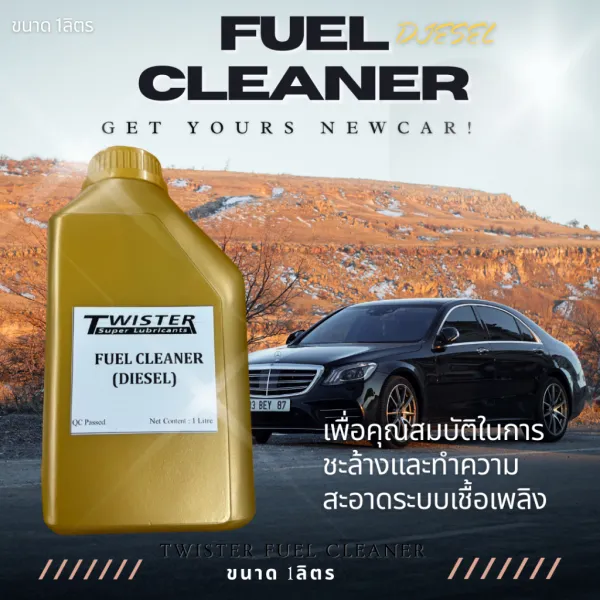
The manual says to use the specified fuel; other fuel may cause continuous white smoke during burn-off (Revo p. 250, Fortuner p. 257). The diesel fuel-system cleaner on this site is described as cleaning the fuel system only. It does not claim to clean a DPF or fix a DPF warning. If the DPF warning appears, follow sections 4 and 5, not an additive.
Quick summary
- “DPF full, please clean…” message: drive steadily at about 60 km/h for 20–30 minutes; if it persists, press the DPF switch as the manual describes
- “Contact a service centre” message + buzzer + engine-control light on: go to a Toyota service centre immediately
- Low-speed driving (20 km/h or less) or frequent start/stop brings the warning sooner
- Use only the engine oil in the manual’s table (EURO V/VI = ACEA C5, C2, JASO DL-1); C3 and CK-4 are not on the list
- The DPF problems and court case are Australian-market matters; ask a Thai service centre about your own vehicle
- If you are unsure whether you have a DPF or which group you are in, ask the dealer before choosing oil
See products at Diesel engine oil and Additives