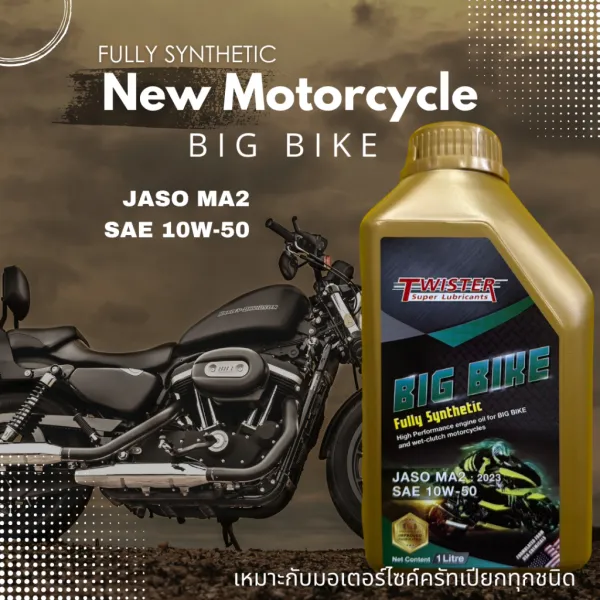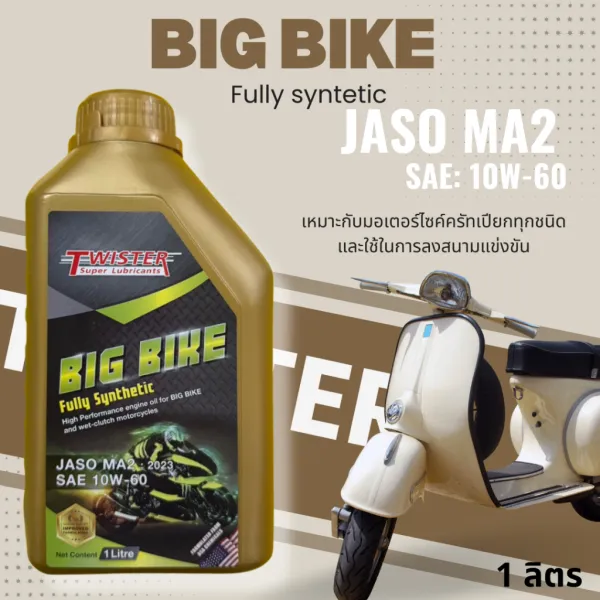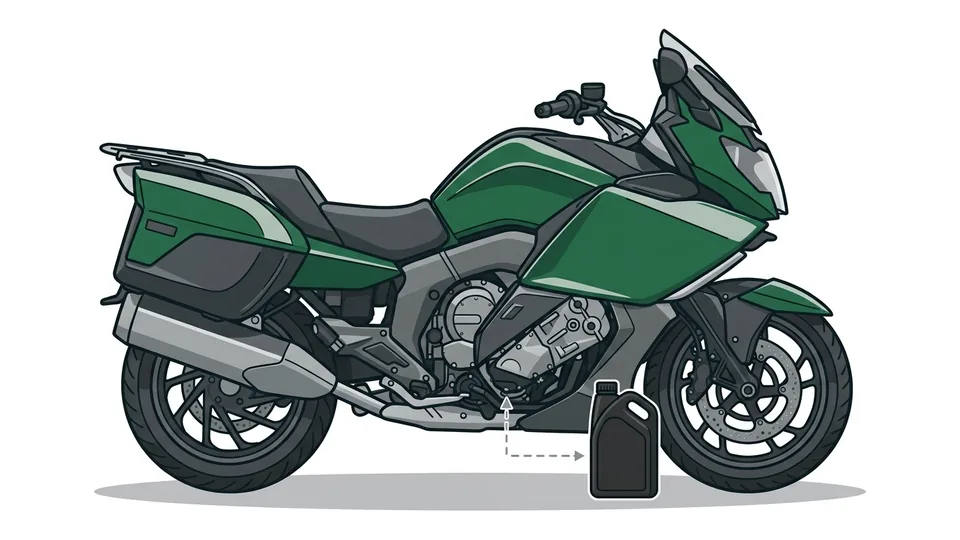
Most big bikes use one oil for the engine, the gearbox and a wet clutch. That means an oil that is “great for cars” may be a poor match for your bike. This guide shows how to read the label, choose a viscosity that follows the manual, and recognise symptoms that point to the oil.
1. Why JASO MA2 matters on a big bike
The JASO T 903 standard exists because modern fuel-economy car oils are thinner and lower in friction, and in a motorcycle that can cause clutch slip and gear pitting wear. Oils are classed MA, MA1, MA2 or MB according to the friction of a clutch test rig.
- MA / MA1 / MA2 → friction high enough for a wet clutch to grip (MA2 sets higher minimums than MA1)
- MB → the lowest-friction class, for bikes where the oil does not soak the clutch
So a wet-clutch big bike looks for JASO MA or MA2 on the label, as its manual specifies. One more point: the oil supplier files the classification and takes responsibility for it, and JASO itself does not guarantee the oil, so buy from sources you trust. See how to read an oil label and buying oil online without getting fakes. For wet versus dry clutches and MA versus MB in general, read JASO MA, MA2, MB.
2. Can you use car engine oil?
No, you shouldn’t. Two main reasons:
- Friction modifiers in fuel-saving car oils stop wet clutch plates from gripping. Some motorcycle makers’ manuals plainly warn against oils labelled “Energy Conserving”.
- The gearbox shares the oil. It must also cope with shear from the gears, not just lubricate pistons — which is exactly why JASO mentions gear wear.
A car oil’s API rating (SP, SN and so on) does not tell you a wet clutch will tolerate it; look for JASO MA/MA2. For the synthetic versus semi-synthetic question, see synthetic vs semi-synthetic.
3. Choosing viscosity: 10W-40 / 10W-50 / 15W-50 / 10W-60
Rule one: use the grade your manual specifies. The maker set it for that model’s clearances, cooling and use. Don’t step up a grade on the theory that thicker must be tougher.
A grade has two parts under SAE J300:
- The number before W (10W, 15W) → cold flow. 10W is limited to a CCS of 7,000 mPa·s maximum at −25 °C; 15W at −20 °C.
- The number after (40, 50, 60) → viscosity at 100 °C.
| Hot grade | Viscosity at 100 °C (cSt) |
|---|---|
| 40 | 12.5 up to below 16.3 |
| 50 | 16.3 up to below 21.9 |
| 60 | 21.9 up to below 26.1 |
On Thai heat: our climate is nowhere near cold enough for the W grade to be a worry, so the number that matters is the second one — the oil film once the engine is hot. 10W-40 and 10W-50 meet the same 10W cold requirement and differ in how thick they are when hot. 10W-60 is the thickest here; use it only if your manual lists it. General viscosity background is in choosing oil viscosity.
4. Parked for months, barely ridden, and change intervals
Intervals differ by model, so follow the manual’s table. Oil ages with time, not just distance; if your manual gives the interval as “km or months”, use whichever comes first. See how often to change engine oil and does engine oil expire.
Before leaving the bike for a long time, read the storage section of the manual to see what the maker wants done with the engine oil, and check the level using the steps in checking oil level before the first start afterwards.
5. Signs the oil may not suit the clutch or gearbox
- Clutch slip — revs climb but road speed doesn’t follow, especially on hard throttle in a high gear
- Stiff gears / hard or jerky shifts soon after an oil change
Other causes exist too, such as worn clutch plates, a wrong oil level or clutch adjustment. If it started right after an oil change, first check the label shows JASO MA/MA2 and the grade in your manual, then have a mechanic inspect it.
Safety: a slipping clutch can leave you with no drive when you need to overtake or climb. If you notice it, slow down, ride carefully to a workshop and don’t keep hammering the throttle.
Quick summary
- Wet clutch → label must show JASO MA or MA2, as the manual says
- No car oil: friction modifiers make the clutch slip, and the gearbox shares the oil
- Viscosity → follow the manual; the number after the dash (40/50/60) is hot viscosity, the W number is cold
- Rarely ridden / long storage → use the manual’s time-based interval, not distance alone
- Clutch slip or stiff gears after an oil change → check the label, then have it inspected
See big bike engine oils by grade · Motorcycle oil category · Big bikes · Picker