Every engine oil bottle carries two or three groups of codes. Once you can read them, you can choose by specification instead of by advertising. The simplest rule: check what your owner’s manual specifies, then pick an oil that matches or exceeds it.
1. SAE viscosity, e.g. 5W-30 or 15W-40
This tells you how “thick” the oil is.
- The number before W (W = Winter) describes cold behaviour. The lower it is, the faster oil flows to protect the engine at start-up.
- The number after the dash is viscosity at operating temperature (100°C). The higher it is, the thicker the oil film.
Newer cars — especially sedans and eco cars — often specify thin oils like 0W-20 or 5W-30, while heavy-duty diesels and older engines often use 15W-40 or 20W-50. Don’t move far from the viscosity in your manual; engine clearances are designed around it.
2. API grades — the letters tell engine type and generation
The API (American Petroleum Institute) has two families:
| Starts with | For | Examples (older → newer) |
|---|---|---|
| C (Commercial) | Diesel engines | CH-4 → CI-4 → CJ-4 → CK-4 |
| S (Service) | Gasoline engines | SL → SM → SN → SP → SQ |
The later the second letter, the newer and more demanding the standard, and most newer grades can replace earlier ones. For example:
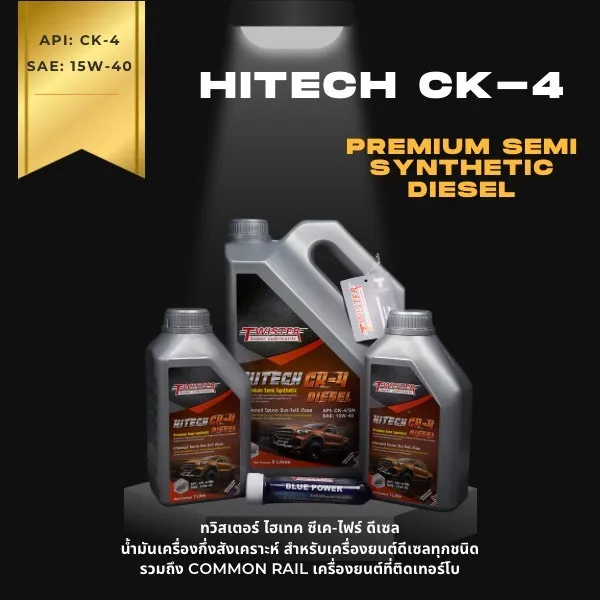
- CK-4 is designed for modern diesels with exhaust after-treatment and can replace CJ-4 / CI-4.
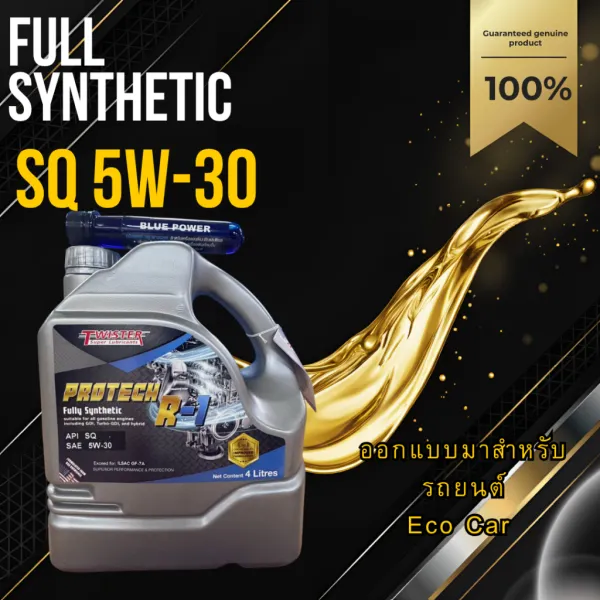
- SP and SQ add tests against low-speed pre-ignition (LSPI) and timing-chain wear — important for direct-injection (GDI) and turbo gasoline engines.
Some bottles show a pair such as CI-4/SL, meaning the oil meets both a diesel and a gasoline standard; the first one is its primary use.
3. ILSAC and ACEA — additional standards
- ILSAC GF-6 / GF-7 apply to low-viscosity gasoline oils focused on fuel economy, common in Japanese cars.
- ACEA is the European system. C3, for example, is a mid-SAPS (mid-ash) oil suited to cars with a diesel particulate filter (DPF); E classes are for heavy-duty diesels.
4. JASO for motorcycles
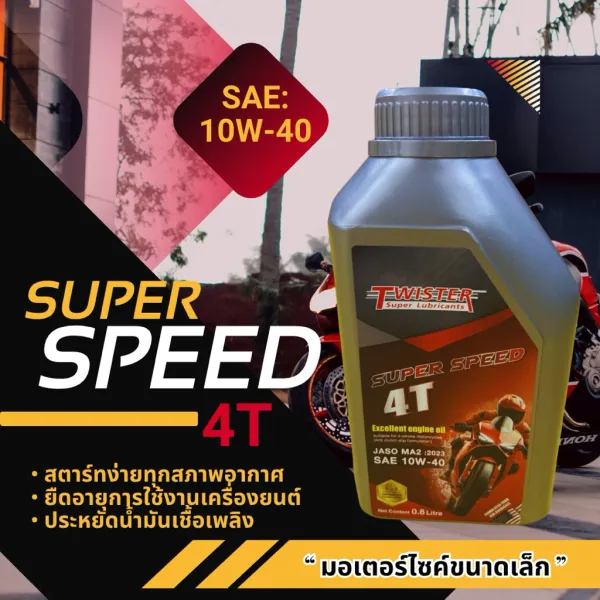
Most manual motorcycles use a wet clutch bathed in the same engine oil. Car oils with friction modifiers can make that clutch slip.
- JASO MA / MA2 — for wet clutches (MA2 has higher friction, good for hard use).
- JASO MB — for scooters with a dry clutch.
5. Fully synthetic vs semi-synthetic
- Fully synthetic resists heat and holds viscosity better — good for performance, turbo or hard-working engines, at a higher price.
- Semi-synthetic balances price and protection for everyday use.
Quick checklist
- Check the manual for viscosity (e.g. 5W-30) and minimum grade (e.g. API SP).
- Pick an oil with the same viscosity and an equal or newer grade.
- Wet-clutch motorcycles need JASO MA/MA2.
- If your vehicle has a DPF, look for a compatible grade such as API CK-4 or ACEA C3.
For a quick suggestion, try the picker on the home page or browse all products with specs.