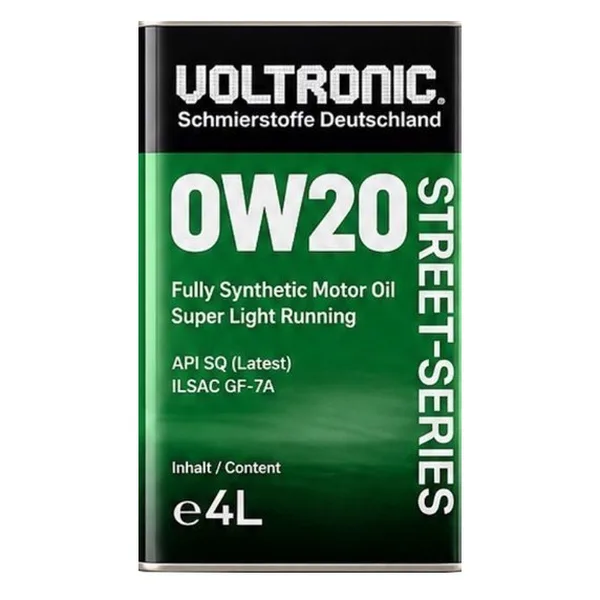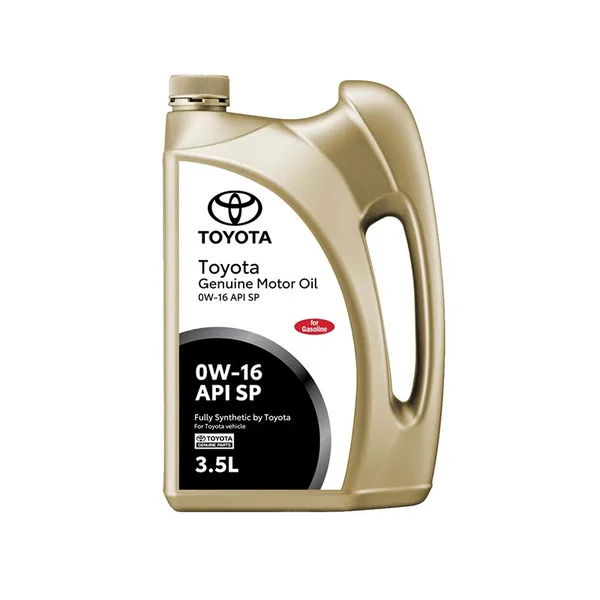
A hybrid’s engine doesn’t run continuously like a conventional car’s, so it’s fair to ask whether it needs special oil, and why some manuals call for very thin grades. The short answer is follow your owner’s manual. Here’s the reasoning behind that, and what the label can actually tell you.
1. Why hybrid engines are tough on oil
A hybrid engine stops and starts constantly and often runs in short bursts, so its oil spends more time at lower temperatures than in a conventional car. Research and oil-maker technical articles point to these main issues:
- Moisture build-up — water vapor from combustion condenses in the engine when it doesn’t get hot enough to drive it off, which can cause corrosion and sludge
- Fuel in the oil — some unburned gasoline slips past the piston rings and thins the oil
- Frequent starts — every time the engine fires, oil has to reach the parts quickly, so cold flow (the number before the W) matters
How much this matters depends on how you drive: repeated short trips are harder on oil than long runs. That is why the change interval should follow the manual’s “severe” schedule where it applies (see section 6).
2. What 0W-16, 0W-20 and 0W-8 mean
Viscosity grades are defined by SAE J300. The number before the W describes cold flow; the last number relates to hot viscosity — lower means thinner. The low grades are recent additions: SAE 16 (April 2013) and SAE 8 and 12 (January 2015).
| Last number | Viscosity at 100°C (cSt) | Minimum HTHS at 150°C (mPa·s) |
|---|---|---|
| SAE 20 | 6.9 to under 9.3 | 2.6 |
| SAE 16 | 6.1 to under 8.2 | 2.3 |
| SAE 8 | 4.0 to under 6.1 | 1.7 |
HTHS is viscosity when hot and under high shear. A lower value means a thinner oil film at operating conditions, so these oils suit only engines designed for them — manufacturers that specify them have adapted the engine accordingly.
Don’t pick a thinner grade than your manual. 0W-8 exists in the standard, but we couldn’t confirm which cars on the Thai market specify it. If your manual doesn’t list it, don’t use it.
3. ILSAC GF-7A / GF-7B (and the earlier GF-6A / GF-6B)
ILSAC splits its standard into two groups by viscosity. The current one is GF-7 (first licensed on 31 March 2025, alongside API SQ); GF-6 (May 2020, alongside API SP) is still common on shelves.
- GF-7A / GF-6A — the common grades such as 0W-20, 5W-20, 0W-30, 5W-30 and 10W-30
- GF-7B / GF-6B — 0W-16 only. Other performance requirements match the A version, with a lower HTHS requirement for extra fuel economy. B-category oils carry the shield-shaped Certification Mark, not the starburst
So a B oil isn’t “better”; it’s thinner, and only for engines specified for 0W-16. GF-7 is newer than GF-6 and can replace it in the same viscosity grade.
4. Can you use 0W-20 instead of 0W-16?
Only your own manual can answer that. Some manuals include wording allowing another grade when the specified one isn’t available; others don’t. We couldn’t confirm the wording in Thai-market manuals, so we won’t guess.
- Manual says the substitute is allowed → follow its conditions (for example a time limit, or switching back)
- Manual is silent → use the specified grade; if unsure, ask the brand’s service center
- Car already specifies 0W-20 → no need to look for 0W-16, and don’t swap
For viscosity choice in general, see Changing engine oil viscosity.
5. What does “for hybrid” on a bottle mean?
As far as we could verify, there is no API, ILSAC or SAE standard specific to hybrids. “For hybrid” on a label is a brand’s marketing wording saying the formula was designed with hybrid operating conditions in mind — not a special certification.
The reliable way to check is to look at what the label states:
- Viscosity matches your manual (e.g. 0W-20 or 0W-16)
- API / ILSAC equals or exceeds what the manual requires (see Reading an engine oil label)
- If the manual lists a manufacturer code, the label states it meets that requirement
If a “for hybrid” bottle passes all three, it’s fine. If it doesn’t, the word “hybrid” doesn’t help.
6. Oil change interval for hybrids
Follow the manual; there’s no single number that fits every model. Because hybrids often run with the engine not fully warm, use the manual’s severe-condition schedule if you do repeated short trips or lots of stop-and-go. For how to read the schedule, see How often to change engine oil.
Quick summary
- Follow the manual for both viscosity and standards — don’t go thinner or thicker on your own
- Stop-start running exposes oil to moisture and fuel dilution → don’t stretch the interval
- GF-7B / GF-6B = 0W-16 only · GF-7A / GF-6A = the other common grades
- Whether 0W-20 can replace 0W-16 depends on your manual’s wording, not guesswork
- “For hybrid” isn’t a standard — check API/ILSAC/viscosity on the label instead
Browse products: hybrid engine oil · hybrid vehicles · gasoline engine oil · use the finder