You can use E20 instead of 95 if your car is a model the manufacturer certifies for E20. If it is not, don’t: not every car tolerates 20% ethanol. Support depends on the model and engine, not on whether the car is petrol. This guide shows how to check, and answers the common questions: can you mix fuels, how much more fuel does it use, and do you need to change the engine oil.
1. What is E20?
E20 is gasohol made of 80% base gasoline and 20% ethanol of 99.5% purity. Thailand’s Department of Energy Business (DOEB) says a car that can use it must be designed for it: its metal, rubber and plastic parts must tolerate ethanol well, and the fuel-injection control must be adjusted to the fuel’s properties.
Ordinary gasohol 91/95 contains less ethanol (about 10%, called E10). E20 is the stronger blend, so compatibility has to be confirmed.
2. How to check whether your car supports E20
| Method | How | Note |
|---|---|---|
| Fuel cap / filler flap | Look for the sticker or symbol | Fastest |
| Owner’s manual | Fuel information section — find the maximum ethanol % | Match it to your engine |
| Service centre | Ask with model and year | Use if the sticker has faded or the manual is lost |
| Official model list | DOEB publishes lists of supporting cars and motorcycles, based on Thai Automotive Industry Association data | See the DOEB website (doeb.go.th) |
Examples from real manuals
- Toyota Yaris Ativ — the English-language manual on Toyota Thailand’s manual site says the 3NR-VE engine (the 1.2 L in the Ativ on this site) may use up to 20% ethanol, with RON 95 or higher. The 1NR-VE/2NR-VE engines in the same manual are limited to 10%. The answer changes with the engine.
- Toyota Corolla and Camry Hybrid — the manuals carry a Thailand-specific statement allowing up to 20% ethanol.
- Honda City Hatchback 1.0 turbo — the Thai manual recommends premium unleaded/gasohol up to E20, RON 95 or higher. See this model’s fluid table.
Older cars need extra care. DOEB’s 2013 leaflet lists Toyota only from February 2008 and Honda from 2008. The 2006 Camry ACV40 and 2006 Civic FD on this site predate that, and our model data does not record ethanol limits for them. Ask a service centre or read the manual; don’t guess from the model year.
3. A non-supporting car gets E20: what happens
DOEB and the Thai Automotive Industry Association both say E20 may be used only in models the manufacturer certifies, otherwise damage is possible. The reason is that the fuel-system materials and settings were not designed for this ethanol level.
We found no official source that lists specific damage, part by part, for each model that has been given E20, so we won’t guess symptoms. What the Toyota Thailand manuals do confirm: fuels with very high ethanol such as E50, E85 and E100 will damage the fuel system, and you should ask the dealer when in doubt.
If you have already filled up and aren’t sure the car supports it
- Don’t refill. Ask a service centre, with model and year, what to do about the fuel already in the tank.
- Stop and call a mechanic immediately if you smell strong fuel or see a leak.
- Go to the service centre if the engine hesitates, runs rough, is hard to start, or the engine warning light comes on.
4. Can you mix E20 with 95 or 91?
On ethanol alone, mixing is fine if the car already supports E20, because the blend in the tank sits between E10 and E20. Octane is the thing to watch.
| Situation | Result |
|---|---|
| E20-capable car + 95 or gasohol 95 | Ethanol never above 20%, octane not below 95. Nothing against the manual. |
| E20-capable car whose manual requires RON 95+ + mixing in 91 | Octane may fall below what the manual requires. Honda says lower octane than specified may cause knocking, and below 91 may damage the engine. |
| Car certified only to E10 + E20 added to leftover fuel | The blend can exceed 10% by simple arithmetic: half a tank of E10 plus half a tank of E20 is about 15%, above the rating. |
Mixing doesn’t make E20 “safer” for a car that doesn’t support it. If your car is limited to E10, keep using gasohol 91/95.
5. Energy content and fuel use
Ethanol has less energy per litre than gasoline. The US Department of Energy says ethanol has about one-third less energy than gasoline. DOEB says E20 uses about 7% more fuel than plain gasoline (no ethanol), and that a price gap larger than 7% makes it worthwhile.
Two things to know
- The 7% figure is against plain gasoline, not against gasohol 95, which already contains about 10% ethanol. The gap between E20 and 95 is therefore smaller. We found no official Thai figure comparing the two directly.
- Real numbers depend on the car and how you drive. The most direct test is to log km/L over 2–3 consecutive tanks and compare.
E20 is usually cheaper. Check today’s price at the pump, and compare it with your own km/L.
6. Ethanol absorbs moisture: parked cars and older motorcycles
Ethanol dissolves water readily. A US EPA memo explains that ethanol blends dissolve more water than plain gasoline, but once water exceeds what the fuel can hold it separates out, and separated water can damage an engine. Small amounts dissolved in the fuel are harmless to components. The memo’s example is a 10% ethanol blend; the same principle means more ethanol can hold more water.
In practice
- Cars parked a long time or used rarely — we found no official “how many days” threshold, so we give no number. If the car will sit for a long period, ask a service centre which fuel to leave in it. If it is hard to start or hesitates after sitting, have a mechanic check it.
- Motorcycles — the model list in DOEB’s 2013 leaflet covers 4-stroke fuel-injected models made from mid-2008. For carburettor or older bikes there is no source confirming support. Check the sticker, manual, or ask the brand’s service centre.
7. Effect on engine oil
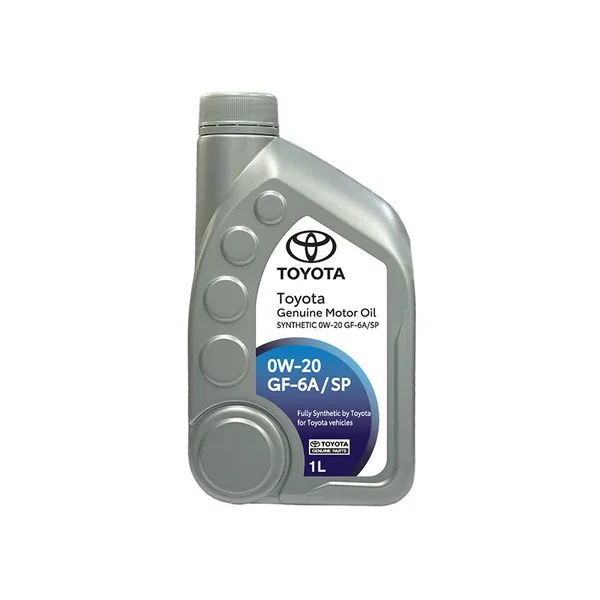
You don’t need to change engine oil just because you switched to E20. The three Toyota manuals we checked (Yaris Ativ, Corolla, Camry Hybrid) and the Honda City manual contain no statement, in the sections that mention E20, asking for a different oil grade or a shorter change interval for E20.
We searched and found no reliable source saying E20 degrades oil faster or needs more frequent changes, so we don’t claim it. Use the grade and interval in your manual. See engine oil change interval and how to read an engine oil label. When buying, match the grade and standard to your manual, not to whether you use E20.
8. How necessary are fuel-system cleaners?
The Toyota manuals we checked don’t require fuel additives, and they warn against additives containing metals. The Thai Honda City manual has an engine/injector-cleaner section: it says fuel quality differs by region, to use it at the recommended schedule, to use genuine Honda cleaner or one containing PEA, that regular use may be necessary in some countries or regions, and to ask a Honda service centre for details.
So E20 does not make them mandatory. It depends on your car’s manual and service centre. If you decide to use one, follow the label.
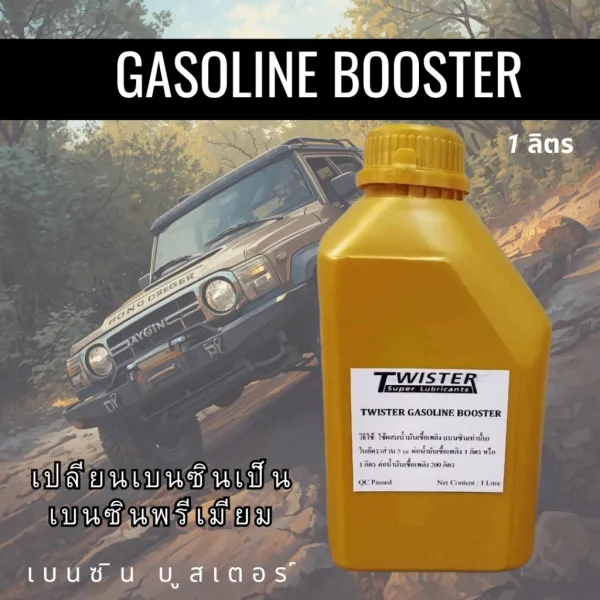
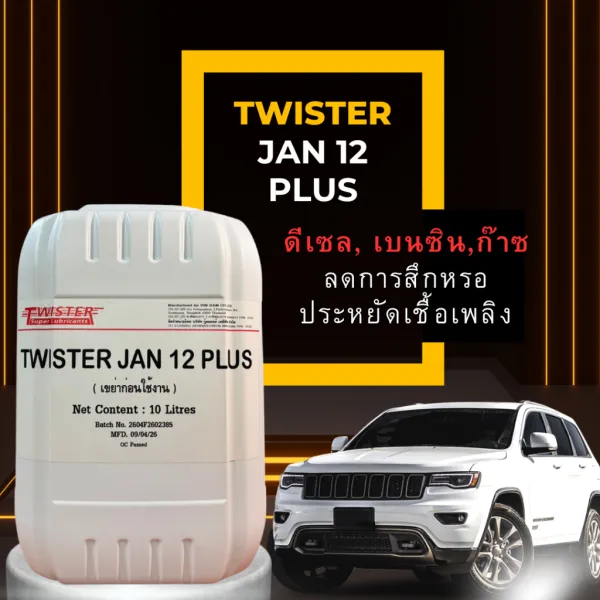
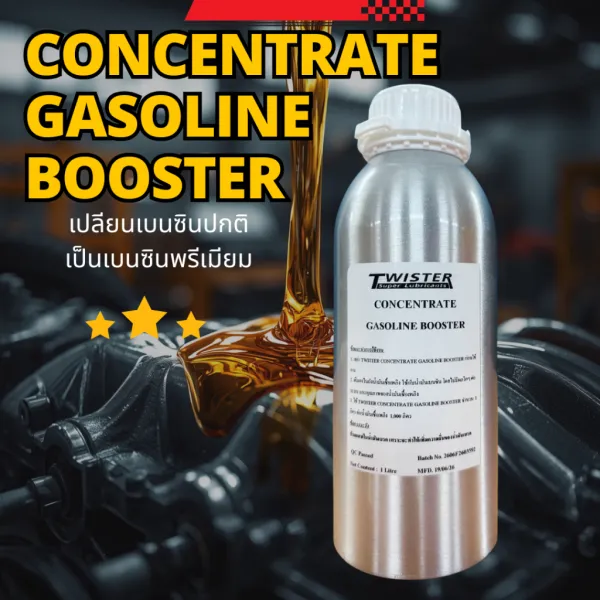
| Product | What the label or product details say |
|---|---|
| Gasoline Booster | Gasoline only; 5 cc per litre of fuel; never add to engine oil |
| Gasoline Concentrate Booster | 1 L per 1,000 L of fuel; suits large volumes rather than one car’s tank |
| JAN12 PLUS | The seller says it suits diesel, gasoline and gasohol; the label images we have show no dosage, so read the actual package |
Cautions
- Don’t expect more than the label says. Additives are not repairs and don’t fix hesitation caused by worn or failed parts. See Engine additives: are they worth it?
- They don’t make a non-E20 car safe for E20.
- Toyota owners — the manual forbids metallic additives. We have no composition data for the products above, so ask the dealer or the manufacturer first.
- Dose at the label rate, never above it.
Quick summary
- E20 only in cars the manufacturer certifies. Check the fuel cap, manual, service centre or DOEB’s list.
- Match your engine. The same model with a different engine can have a different ethanol limit.
- Mixing is fine if the car supports E20, but if the manual wants RON 95+, don’t mix in 91. A car limited to E10 should not get E20.
- Slightly higher fuel use. No official figure compares E20 with 95 directly; log your own km/L. Check today’s price at the pump.
- Parked a long time, or older motorcycle → ask the service centre first.
- Engine oil: no change needed for E20; follow the manual. Fuel-system cleaner: not required because of E20; follow the manual and the label.
Browse Additives and Gasoline engine oil