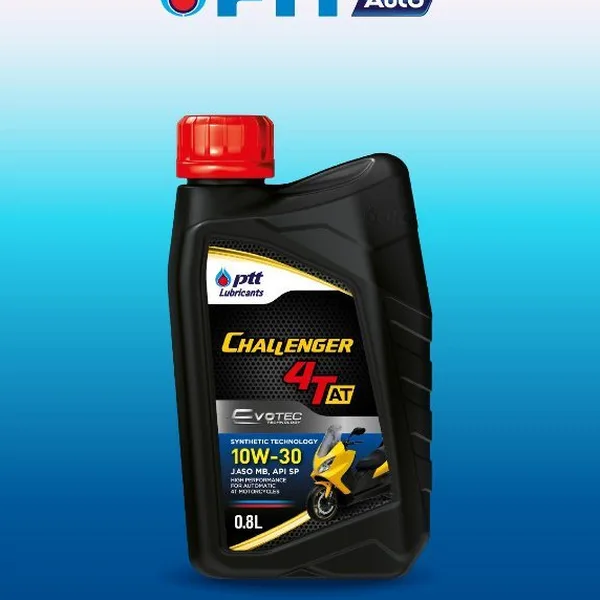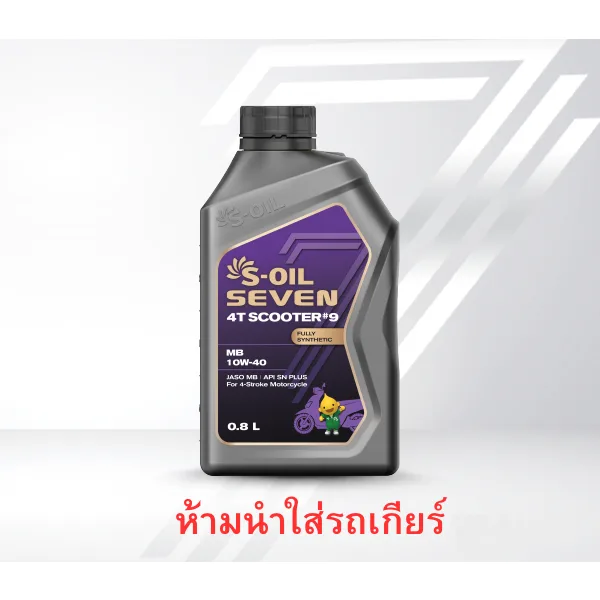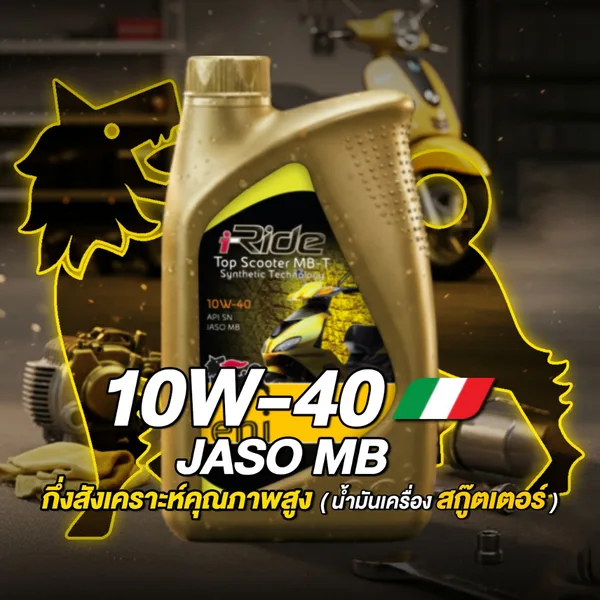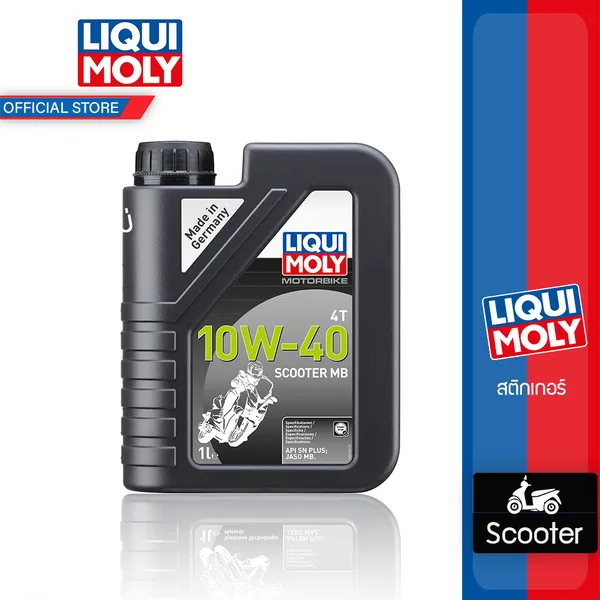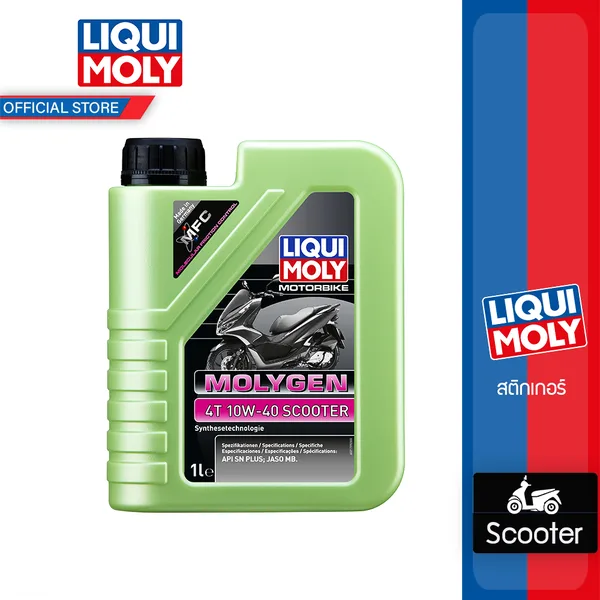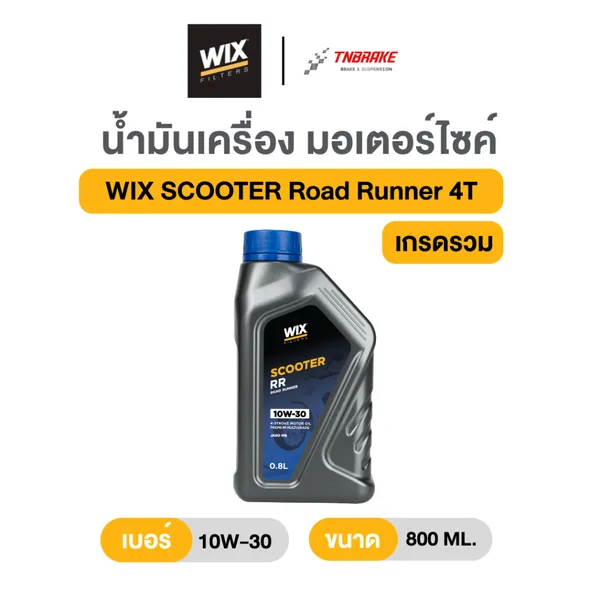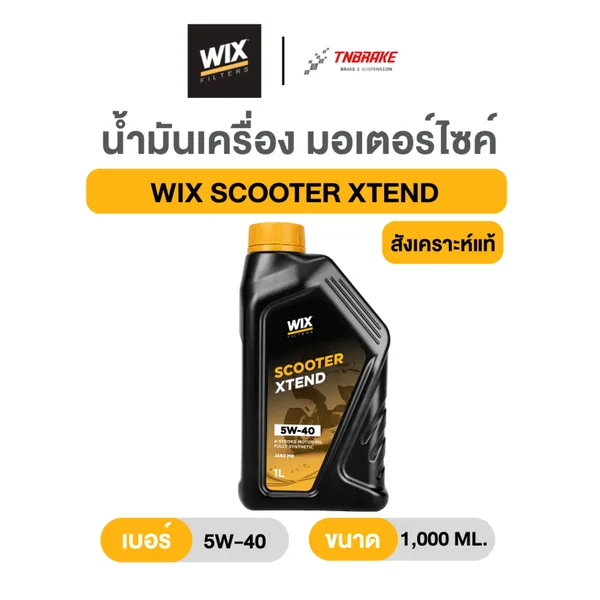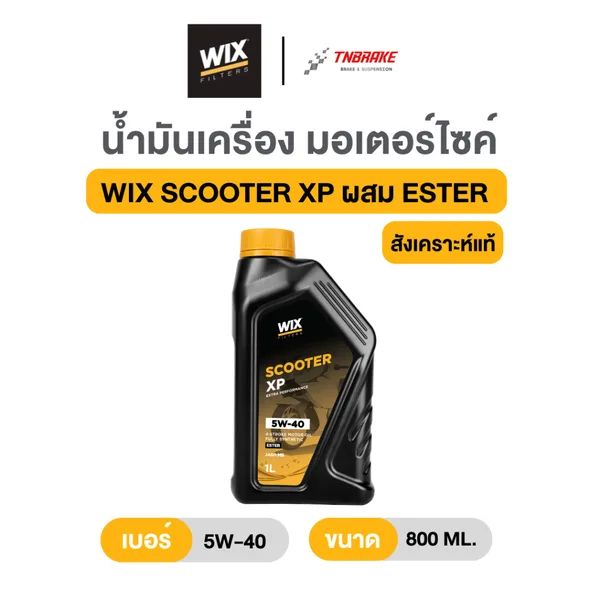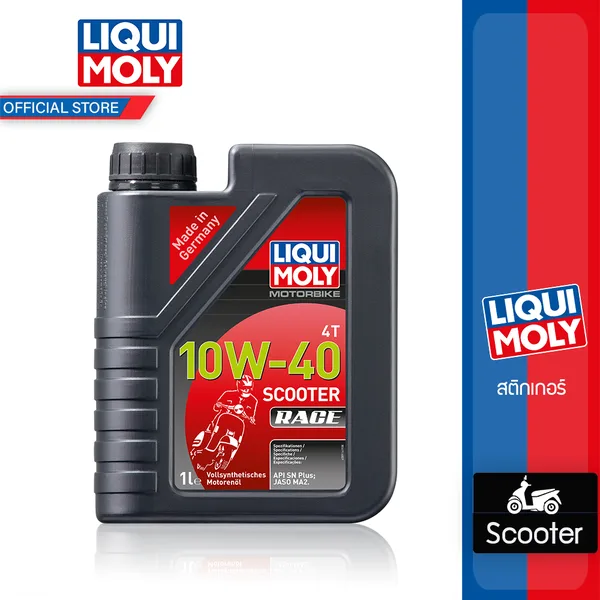
Scooter oil labels are packed with 10W-30, 10W-40, JASO MB and MA, which makes choosing harder than it should be. The safest answer is simple: read your owner’s manual first, then buy the bottle whose label matches it. Here is what each value means.
1. How do 10W-30 and 10W-40 differ?
- Same 10W → the cold-flow limit for the 10W grade under SAE J300 is the same for both.
- -30 vs -40 → they differ in viscosity at 100°C. Grade 30 sits at roughly 9.3 to under 12.5 cSt, grade 40 at roughly 12.5 to under 16.3 cSt, so 40 is thicker when the engine is hot.
Makers pick the grade to suit the engine. For example, the Yamaha Grand Filano manual specifies SAE 10W-40, while many other scooters specify 10W-30. No single grade is best for every scooter, so follow the manual for your model.
2. Why can a scooter use JASO MB, yet some manuals say MA?
A belt-drive (CVT) scooter has a dry clutch outside the crankcase, so engine oil never soaks it. That lets makers choose JASO MB, the lowest-friction group. Some manuals ask for MB only, while the Grand Filano manual says JASO MA or MB is fine.
- Manual lists only MB → stick to MB
- Manual lists MA or MB → either works
For the details of MA, MA2 and MB, and why car oil is a different question, see the JASO guide.
3. Small sump: check the level often
The Grand Filano manual gives an oil-change capacity of 0.8 L (other models differ, so check yours). Yamaha’s manual says to check the level before every ride.
Check it safely: put the scooter on its centre stand, warm the engine for a few minutes, switch off, let the oil settle, then read the dipstick. The exhaust gets very hot, so let it cool before opening the filler cap to avoid burns. Full steps are in the oil level guide.
4. Change intervals in the manufacturers’ manuals
| Model (examples) | Engine oil change |
|---|---|
| Yamaha Grand Filano | At 1,000 km, then every 4,000 km (or 6 months) per the service chart |
Other models differ. What they share is count both distance and months, and use whichever comes first. Bikes under warranty should follow the dealer’s schedule. For normal versus severe use, see the oil change interval guide.
5. Delivery riders: harder use than the chart assumes
All-day riding, frequent stop-and-go, heavy loads or idling in the sun count as hard use. Treat the chart interval as a ceiling, not a target.
- Changing early is always allowed, and if your manual lists a severe-use interval, use that one.
- Check the level daily and top up with the same oil you already use. Don’t wait for change day.
6. Is full synthetic worth it for a scooter?
The makers sell both. Honda offers a 100% synthetic JASO MB 10W-30 in a 0.8 L bottle for automatic bikes, and Yamaha offers Blue Core 4AT, a semi-synthetic JASO MB 10W-40. Decide in this order:
- Grade and JASO must match the manual first. A full synthetic in the wrong grade is no better than a correct semi-synthetic.
- Full synthetic doesn’t license a longer interval. Use the maker’s interval.
For the general synthetic comparison, see the synthetic vs semi-synthetic guide.
Quick summary
- Manual first: its grade and JASO class are the answer
- Same 10W; the second number is hot viscosity (40 is thicker than 30)
- Dry clutch: JASO MB works, and some manuals accept MA too
- Small sump (0.8 L on the Grand Filano): check the level often
- Delivery riders: change before the interval is up
Read next: JASO MA/MB · scooter gear oil · scooter engine oils on the site · oil finder