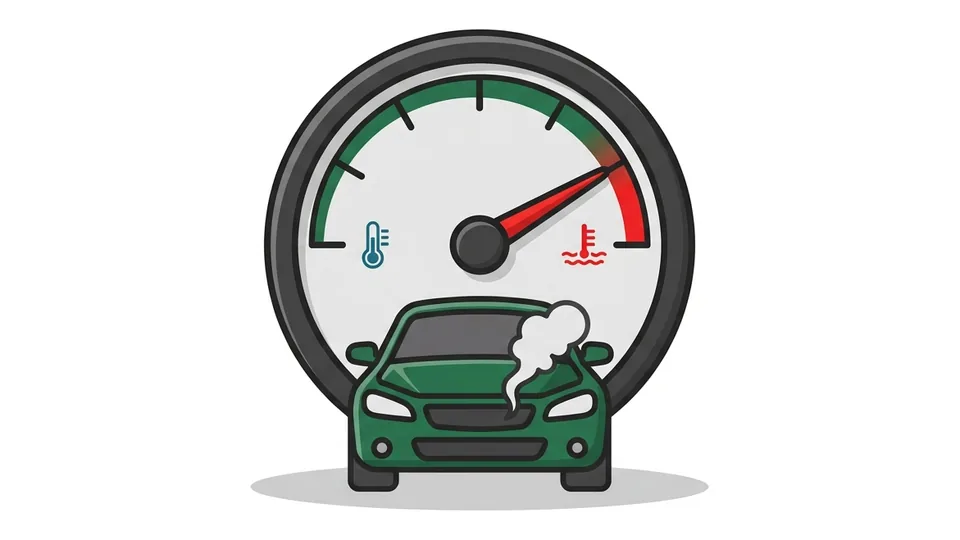
A temperature gauge in the red, a warning light, or steam from under the hood while you drive is a moment where a few wrong moves can wreck the engine or scald you. This guide sums up what car makers and motoring associations advise, in order.
1. Signs, and what to do immediately
Signs: gauge at maximum or a warning light/message · steam from under the hood · loss of power, where the car won’t speed up when you press the pedal. Any one of these means stop; don’t push on.
- Turn the A/C off and switch on the hazard lights
- Get to a safe place quickly. If you can’t stop right away, AAA suggests A/C off and heater on in the meantime
- Engine off or not? See section 2 (if unsure, switch it off)
- Get everyone out and away from traffic
- If there’s steam, don’t lift the hood yet. Wait until it stops
2. Engine off or idling? The sources differ
| Source | Advice |
|---|---|
| Toyota (owner’s manual) | Stop in a safe place, A/C off, then stop the engine |
| Honda (owner’s manual) | If no steam, keep the engine running and open the hood; check the cooling fan is spinning. If steam or the fan isn’t running, switch off |
| AAA (US) | Shut the engine off right away, exit the vehicle, call for help |
| RACQ (Australia) | Pull over safely and switch the engine off |
Honda allows idling only with no steam and a working fan; the others say switch off. Designs vary, so follow your own owner’s manual, and if you don’t know it, switch the engine off.
3. Never open a hot radiator cap
Danger: The cooling system is pressurized. Loosening the radiator or reservoir cap on a hot engine can spray boiling coolant and steam and cause severe scalds. Toyota, Honda, AAA and RACQ all warn about this.
- Let it cool. The manuals give no fixed time; AAA says wait at least 15 minutes before adding water or coolant. Treat that as a minimum and wait longer if it’s still hot
- If you must open the cap, Honda says cover it with a thick cloth and do it only when the radiator is cool
- Keep hands and loose clothing (ties, scarves) away from the fans and belts
4. What can you add in an emergency?
- Only once the engine has cooled, and add slowly (Toyota). Check the reservoir level
- No coolant? Clean water works temporarily. Toyota and Honda both say so; Honda says to switch back to proper coolant as soon as possible
- If the level drops again after topping up, there’s a leak. Don’t keep driving
For types, colors and mixing, see the radiator coolant guide.
5. Common causes
- Low or leaking coolant — low level, stains under the car
- Cooling fan not working — Toyota says to check the fans spin when the A/C is on
- Failed water pump · stuck thermostat
- Clogged or leaking radiator or hoses · worn radiator cap
- Blown head gasket · low engine oil (checking oil level)
Only a mechanic’s inspection tells you the real cause. Don’t guess and replace parts.
6. When to call a tow truck
- Fans not running — Toyota and Honda say stop the engine at once and contact the dealer
- Heavy coolant loss, or it disappears again after topping up
- Steam or the warning returns after restarting
- Unsure — AAA warns that topping up yourself and driving on risks both burns and serious engine damage
RACQ notes damage can show up days to months later, so find the cause even if the car seems fine.
7. Prevention
- Check coolant level with the engine cold. AAA suggests monthly · fix leaks promptly
- Inspect belts and hoses at the intervals in your manual
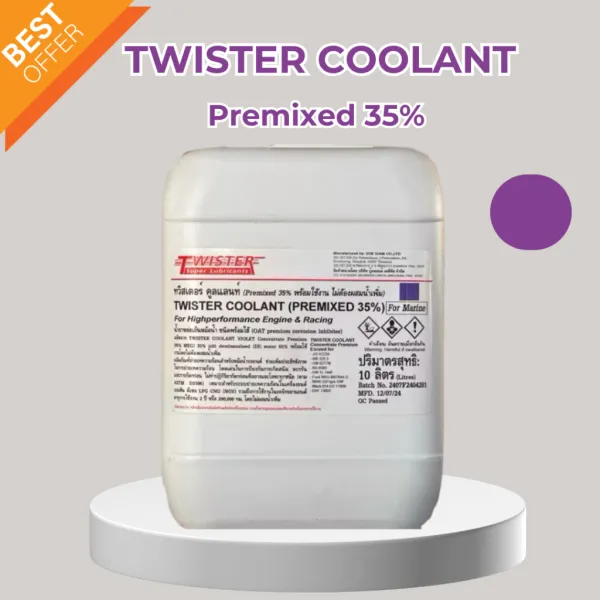
- Use the coolant type your car specifies. If you want a spare, premixed coolant needs no mixing, but it must be the right type for your car
Quick summary
- Right away: A/C off, stop somewhere safe, everyone out, engine off (Honda allows idling only with no steam and a working fan; follow your manual)
- Never open a hot radiator cap · wait at least 15 minutes before adding anything
- In an emergency, clean water works — return to proper coolant soon
- Call a tow if the fans don’t run, the leak is heavy, or symptoms return
See products in this category: Gear oil · Brake · Radiator · Related: radiator coolant